How Hot is Hot?

Sorry, photograph of the core-mantle boundary is temporarily unavailable.

Sorry, photograph of the core-mantle boundary is temporarily unavailable.

How Hot is Hot?  4,000 degrees K, according to new study.  Researchers at the Magma and Volcanoes Laboratory (CNRS U Blaise Pascal) and the European Synchrotron (ESRF) have collided to make sense of the really hot temperatures at the core-mantle boundary. The CNRS-ESRF study, “New Insight into the Temp- erature of Deep Earth,” has mimicked the conditions at 2,900 kilometres below surface. Plate tectonics theory tells us that our ocean crust is subducted towards that mantle-core interface. CNRS-ESRF tells us that at the boundary temperatures rise rapidly to 4,000 K and the basaltic former crust produces a silica-rich liquid that reacts with the surrounding mantle material. As one approaches the lower mantle (hopefully in an insulated jump suit), one finds that the temperature gradient increases more rapidly than it does at shallower mantle depths. The scientists tell us that the temperature increases about 1,000 in the last few hundred kilometres.

The point of the study was to observe what happens to basalt as it approaches lower-mantle conditions. This was achieved in the lab. Discovering the traits of the basalt seems to have shed some light on mysteries surrounding seismic wave propagation in the D” (D” being geo-speak for the mantle-core region). By recreating a pressure of 46 GPa (That’s right, 46-gazillion pascals of pressure!) the team found that they had created a basaltic slurry that could be giving the seismic anomalies others have observed. They realized that the temperature would have to be between 3800 and 4150 K  for this to occur, hence their prediction that this is the D” zone’s temperature. You can read the paper by Denis Andrault et.al. in the journal Science by following this link.

It is interesting that we are still working out the temperatures down there. In The Mountain Mystery, I told part of the story of Joseph Fourier and his thought-experiment that placed a piece of the Sun 12 miles below our surface. He said it would take 200,000 years before the dissipating heat reached the surface through conduction. Fourier pre-dated Lord Kelvin with heat-transfer calculations and his math was better, but Kelvin was a powerful force and his errors about the Earth’s temperature, heat dissipation, and the planet’s age are what we remember today. Kelvin thought the Earth’s internal heat was largely residual and the Sun’s heat was due to gravitational pressure. (When radiation and X-rays were discovered, the elderly Kelvin declared them to be hoaxes.)  Consequently, he opted for a young-aged Earth of some 20 million years. He also soundly rejected the idea of mantle convection when it was presented to him by his colleague and assistant, John Perry in 1898. Perry published his idea in Nature and Kelvin ruined his career for his insubordination. And yet, we calculate the core-mantle boundary temperature as 4,000 K. Four thousand Lord Kelvins – now that’s a disturbing mental image!

Read the book,  The Mountain Mystery.
Posted in History, How Geophysics Works, The Book | Tagged , , , , | 2 Comments

Oklahoma – An Earthquake Hot Spot?

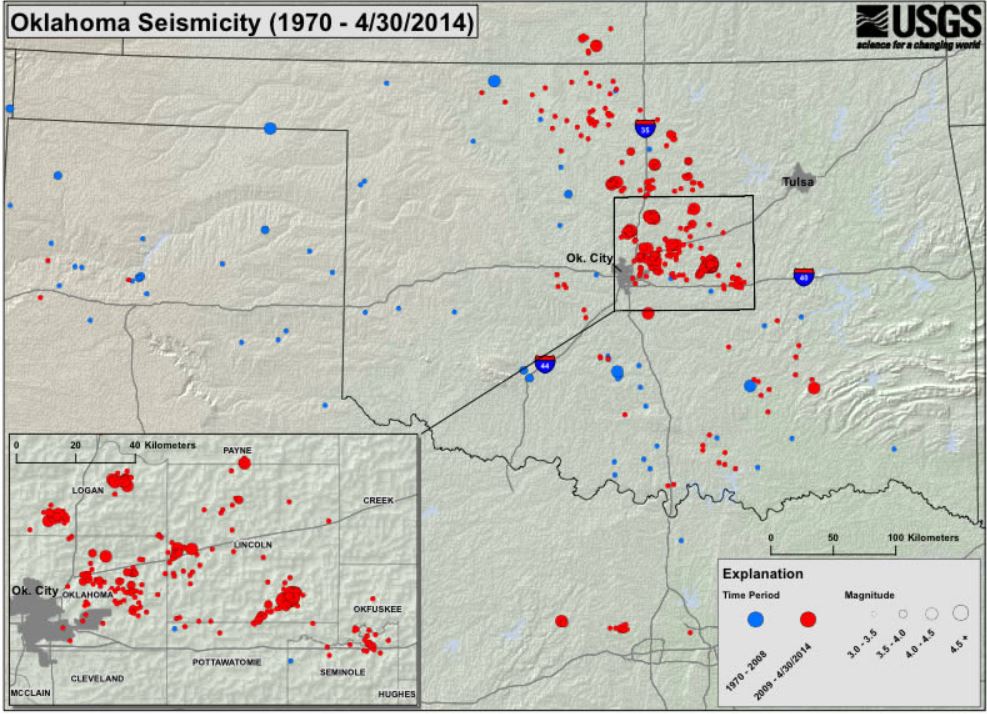
USGS Oklahoma Seismicity Map

USGS Oklahoma Seismicity Map

When we think of American earthquakes, we think of California where the huge plates of the San Andreas are slip-sliding past each other. Or maybe the south coast of Alaska, near the subduction zone that formed the Aleutian and Kuril island arc chains. But Oklahoma? Not likely. In the former case, the continental transform fault marks the boundary between the North American and Pacific Plates. In Alaska, the subduction of the Pacific Plate under the North American Plate create the dish rattling. But Oklahoma’s bull’s-eye forces more than a moment’s pause to see how it fits with the general scheme of plate tectonics.

In a recent USGS press release, the government says earthquake activity in Oklahoma has been surging. Although Oklahoma has long been known as Continue reading

Posted in Engineering, Exploration | Tagged , , | Leave a comment

Kickstarting Tectonics

The Mountain Mystery. tells the story of how (most) geologists and geophysicists finally agreed that plate tectonics moves the continents, opens ocean basins, and scrunches crust into mountains. But what started the tectonic motion? Most of us assume that the scheme kicked into action about three billion years ago as a result of temperature differentials – the lower mantle was (and is) hotter than the near-surface. As heat dissipated, convection currents began.

We are fairly certain today that convection is moving the continents. As Robert Dietz wrote in “Continent and Ocean Basin Evolution” in 1963:

Thermal convection cells in the mantle provide the fundamental driving force and the mid-ocean rises mark their divergence while the continents tend to lie over the convergences. . . The principle novelty of this concept is that no fixed layer separates the sea floor from the convection process; rather the ocean bottom is the exposed and outcropping limb of this convection. Although perhaps alarming at first thought, seafloor spreading is an orderly, evolutionary and actualistic process consonant with geologic history.”

The bold lettering is mine, added to be sure you noticed what Dietz is saying – the ocean crust is part of the moving convection cell. Dietz calls this alarming. Creepy is another good word. His thesis – sometimes called the “Commotion in the Ocean” paper – followed Harry Hess’s work and generally spoke the same words regarding spreading seafloor and mobile crust.

But is it necessary to have convection currents dissipating the Earth’s primordial heat? Lord Kelvin didn’t think so. And he made life unbearably difficult for his long-suffering assistant and junior professor, John Perry, who disagreed with him. Perry tried to convince the Lord of the possibility of mantle convection currents. Lord Kelvin believed the planet was solid to the core and nothing inside flowed. He had calculated that Earth cools only through conduction and his math showed the planet has been cooling since it formed 20 million years ago. That’s right – 20 million years. That’s almost as wrong as 6,000 years. In 1900, when Kelvin was tossing Perry out of his office (because Perry had published in Nature that the Earth is over a billion years old and the mantle dissipates heat via convection), Kelvin stubbornly refused to entertain anything close to a billion years as even remotely possible. Kelvin insisted the planet lost heat through conduction alone and his calculations arrived at something around 20 mya, based on the planet’s rate of heat loss.

Kelvin may have been right about conduction, except he got the planet wrong. Mercury and Mars likely lost their primordial heat mostly through conduction. Not so with planet Earth. The mantle moves, and it seems it has been in motion for a long time.

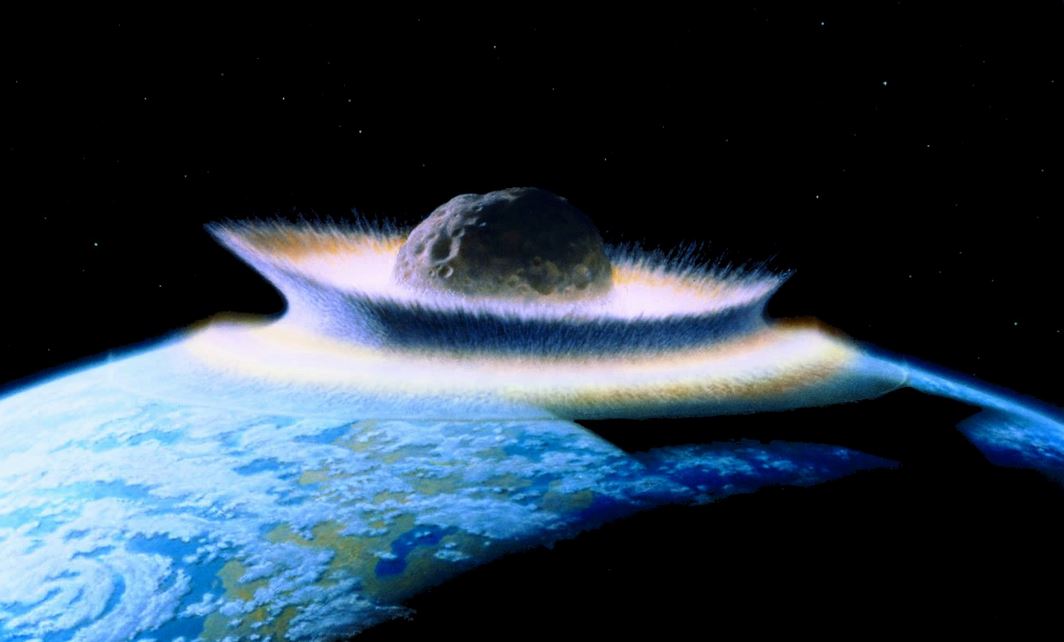
asteroid impactA recent article in Astrobiology Magazine reports tectonics may have been kickstarted by a 50-kilometre-wide space rock that crashed into what we now call South Africa. This is according to Donald Lowe and Norm Sleep who published their thoughts in the journal Geochemistry, Geophysics, and Geosystems. Their paper, “Physics of crustal fracturing and chert dike formation triggered by asteroid impact, ∼3.26 Ga, Barberton greenstone belt, South Africa.” alleges that the asteroid locally fractured the primitive crustal plate. Others have pointed out that the Late Heavy Bombardment era, as that time in Earth’s history was called, experience a lot of ‘heavy bombardments’ all of which helped break up the plates – perhaps into today’s known pieces.  Would the plates arisen and then moved from convection alone, or was the bombardment a necessary prerequisite? Or was the bombardment simply coincidental to the beginning of crustal mobility? Do we know?

Read the book,  The Mountain Mystery.

Posted in History, How Geophysics Works | Tagged , , , , , , | 2 Comments

Searching for Haida Gwaii

haidagwaiibook

The just-released book

Haida Gwaii. Totem poles and sea mist shroud the west coast islands of Canada. Rain is occasionally heavy enough to drown a duck. (30 cm a day is possible.) Or maybe the ducks drown in the tsunamis – earthquakes give the place a good stern shaking every few years with 8.1 (1949) and 7.8 (2012) as recent examples.

Stepping off the west coast of the islands could also get a duck wet – it is a 3,000 metre drop-off into something resembling the abyss. No gradual shelf here.


Continue reading

Posted in Book Review, Exploration, History, Oceans | Tagged , , , | Leave a comment

Doodling Mary Anning

Image

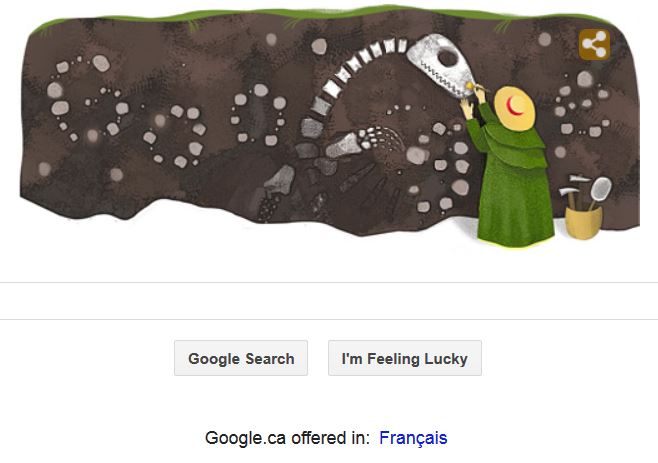
Today Google has a doodle honouring Mary Anning, one of palaeontology’s pioneers. The reason Google chose Anning on this day?  It remembers her birthdate – she would have been 215 years old today. Alas, she didn’t reach 50. Here is her story, lifted from the book  The Mountain Mystery:

    “Anning was a child when she found her first extinct giant. Such fossils were Continue reading

Posted in Biography, History, The Book | Tagged , , | 1 Comment

It’s different

geologist Amos Eaton

Amos Eaton

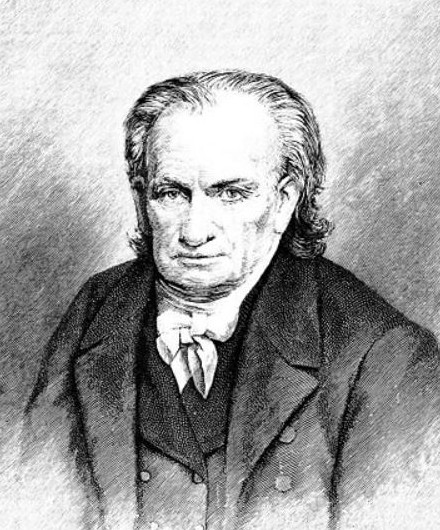
Convicted of forgery, American attorney Amos Eaton spent five years in prison. Released at age 40, his law career ruined, and still protesting his innocence, he moved on. That was in 1815. Geology became his greatest interest and teaching was his passion. His finest accomplishment was the introduction of a new style of science education – based on learning by doing. This fit well with the new country’s ‘can-do’ philosophy and utilitarian approach to everything. Eaton’s method of hands-on teaching had a huge impact on the level of science education in the United States for the next two centuries. He sometimes embarked students on barges and floated them along the Erie Canal where they sketched rock outcrops as they drifted along. In 1824, Eaton co-founded the Rensselaer School, dedicated to the “application of science to the common purposes of life.” Today the school is known as Rensselaer Polytechnic Institute and it is America’s oldest technology university.

We are remembering Amos Eaton on his birthday today (born in 1776) because Continue reading

Posted in Biography, How Geophysics Works, Philosophy, Science Education | Tagged | Leave a comment

Columbus rides again

columbus landing    It seems the Santa Maria has been found. Marine archaeologist Barry Clifford and his team believe they have found the sunken vessel. Columbus left Europe in August, 1492, with three ships – La Pinta, La Nina, and Santa Maria, reaching the Caribbean sometime in October. He toured the islands, visiting San Salvador, Cuba, and Haiti – picking up cheap bling to bring back to Spain so he could impress his family (and the queen). It was offshore Haiti that Columbus, captain of the boat, ran Santa Maria aground in December. He abandoned her, Mary sank in uncharted waters, Columbus abandoned Continue reading

Posted in Exploration, Oceans | Tagged , , , | 1 Comment

The Dustbowl Oceanographer’s Birthday

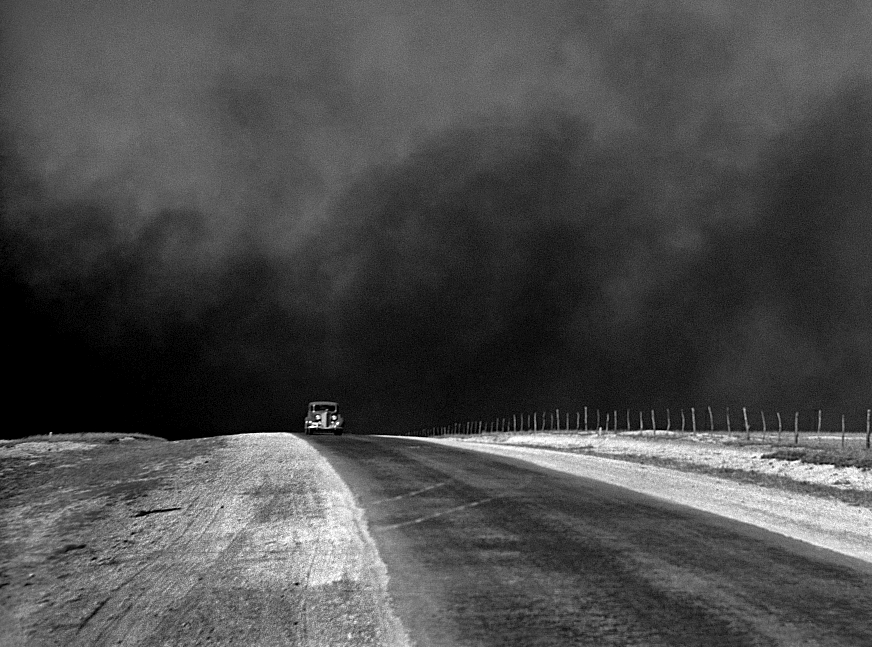
FSA/8b27000/8b272008b27276.tifWilliam Maurice Ewing was a Texas farmboy from the state’s desert panhandle. Somehow he became one of America’s greatest oceanographers. Today we remember his birthday (May 12, 1906) and remember a bit about what he did for the study of the Earth.

It was within his team that Marie Tharp and Bruce Heezen discovered the great mid-ocean rift and the idea of continental drift – redesigned as plate tectonics – began to be taken seriously. Even with their phenomenal 1955 discovery, the new theory took almost 15 years to gain (nearly) universal acceptance.

Ewing was the fourth of ten kids. The first three died – of Continue reading

Posted in Biography, Exploration, Oceans | Tagged , , | 1 Comment

After Wegener

ImageMay 12 is the 83rd anniversary of the discovery of Alfred Wegener’s body.

Wegener, of course, was the meteorologist, physicist, and polar explorer who made the first really reasonable conjecture about moveable continents. There were others before him – as early the 1500s map maker Abraham Ortels (Ortelius) noticed the Americas were “torn away from Europe and Africa by earthquakes and floods. The vestiges of the rupture reveal themselves, if someone brings forward a map of the world and considers carefully the coasts of the three continents.” And many did come forward to consider the rifting. For over 300 years scientists as varied as Ben Franklin and George Darwin (not to mention dozens of lesser-known names) proposed continental mobility as the cause of much of the Earth’s landscape.

But it was Alfred Wegener who elevated the idea to something that was difficult to dismiss. Beginning with some of his private notes in 1910, expanded from lectures to book format in 1912, revised constantly during his life, he stayed true to the idea until his death in 1930. Wegener (about whom this blog will have much more to say) was last seen on his 50th birthday, November 1, 1930. He was director of a Greenland polar research camp. The day following his birthday, he and his colleague Rasmus Villumsen were on a mission that delivered supplies to a small outlying camp when they were overtaken by a blizzard. Wegener’s body was found the following spring, May 12, 1931. He was lying upon a reindeer hide, placed there by Villumsen, who was never found.

Upon Wegener’s death, leadership of the Greenland expedition passed to his friend Fritz Loewe. Loewe had trained as a lawyer in Berlin, but developed a passion for science and exploration, earning a PhD in physics. He became a meteorologist and understudy to Alfred Wegener. Before the expedition, Loewe had earned the Iron Cross as a young soldier in the German army and had already spent time in the arctic.

“During the fatal 1930 expedition, Loewe’s feet froze and a colleague at their Greenland camp clipped off nine of Loewe’s toes with tin-snips and a pocket knife to avoid gangrene. Returning to Germany, Loewe, a Jew, was soon dismissed from his post with the Meteorological Service. He was able to relocate with his wife and two young daughters to England until he found permanent work, in 1937, as a lecturer in Melbourne, Australia, where Loewe co-discovered the southern jet stream. Few students knew the remarkable background of their professor with the awkward gait who clomped the university corridors for 25 years.”   (- excerpt from  The Mountain Mystery.)

Immediately upon Alfred Wegener’s death, the continents quit moving. Few geologists were willing to inherit the orphaned theory. Wegener himself had been ridiculed for his proposal that continents move. There were some intrepid advocates – Arthur Holmes and Alexander du Toit spring to mind. But it would take over thirty years before geologists accepted continental drift – modified as plate tectonics – and the name of Alfred Wegener would inspire courage of convictions, rather than serve as a warning against breaking with scholarly tradition and dogma.

Posted in Biography, Exploration, The Book | Tagged , , , | Leave a comment

Mountains as a mystery

The release of the book, The Mountain Mystery, coincides with the 50th Anniversary of the discovery of how the Earth’s mountains were formed. It’s fascinating to think about – in our parents’ and grandparents’ lifetimes, geologists finally figured out why the planet has mountains.

Getting Smaller.  Before plate tectonics, mountains were indeed a mystery. For a long while – a few hundred years, actually, the prevailing notion was the mountains are the scabby remnants of a shrinking, contracting world. Sometimes called the Apple-Earth Theory, advocates championed the idea that the planet is cooling, ridges are forming (“Just like a dry old apple,” they said) and mountains were the result. Not as silly as it sounds – almost everything shrinks as it cools, the Earth is undoubtedly cooling – and has been for billions of years. It would take only a millimeter or two each thousand years. In four billion years, you’ve got mountains.

Getting Bigger.  Then there were the geologists who figured that the planet wasn’t shrinking – it was expanding. Growing a few millimeters each several hundred years. Ripping itself apart at the seams. Advocates described elaborate (and perhaps accurate) schemes in which various inner earth materials crystallized in ways that expanded our old ball of iron and stone. By the way, the fruit for these scientists was the orange – theirs is the Orange-Peel Theory.

Bouncing.  Still others figured mountains rose along the edges of seas where continental erosion filled enormously deep geosynclines which became pressurized and hot. Eventually, a great rebound occurred and the mountains rose as if they were on a trampoline. Alas, this theory has no known fruits.

Just 50 years ago, scientists supporting the improbable idea of mobile continents were in a minority – a rejected, ridiculed minority. They held a counter-intuitive solution: big cumbersome landmasses sailing the oceans. Put that way, it does sound a bit ridiculous. But a newly constructed model – plate tectonics – was being developed to supplant continental drift. The older image of continents plowing through the open seas was being refined. Over the next few months, this blog will look at how that revolution developed and will look at some of the new ideas – and still unresolved issues – that are part of this solution to the mountain mystery.

Posted in The Book | Tagged , , , | Leave a comment