Isostasy Man

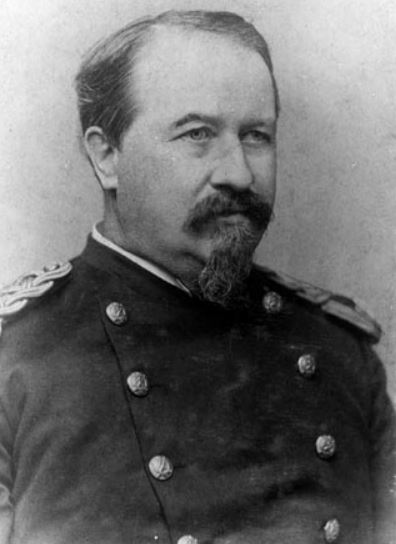
Major Clarence Dutton, around 1880.

Major Clarence Dutton, around 1880.

Since it was Major Clarence Dutton’s 174th birthday yesterday, I thought I’d give him a nod for creating a simple geological concept that almost every geo-freshman finds impossibly confusing. Isostasy should be as easy to understand as a melting iceberg on a warm Arctic afternoon, yet I have seen so many students throw up (their hands) and whine that they just don’t get it.

The word isostasy was invented by Major Dutton who used isos (equal) and stasis (standstill) to describe the way less dense crust (such as continental) stays aloft, hoisting mountain peaks high above us, while denser crust (oceanic) lies low – yet each exerts equal pressure on the materials underlying the crust. In a future blog I will explain the concept with a couple of examples. Today, I want to write a rambling piece about the soldier who was once described by Pulitzerer Wallace Stegner as America’s Poet of the West and who became a renowned and innovative geologist.

As a child of the early 1850s, Dutton was indoctrinated with the conservative religion of the New England boarding school which his parents selected for him. At age 15, he entered Yale divinity college in preparation for life as a minister, but something rational happened to him there. It took just two weeks for Yale divinity school to transform him into a lifelong agnostic. Dutton left divinity school but stayed at Yale, transferring to chemistry and physics. He particularly liked gymnastics and chess, though literature seemed his most natural subject – he won the Yale Literary Prize in his last year at college, in 1860.
Major Dutton

Major Dutton

The War Between the States started shortly after his Yale graduation. Dutton enlisted and participated in nasty  battles at Fredericksburg and Petersburg. He stayed in the Army after the war and then drifted, fully under-utilizing his recognized genius by simply taking mindless bureaucratic army posts – though he wrote a few significant papers in practical chemistry journals as a hobby. He was married, but not very ambitious – preferring to use his weekends drinking, puffing cigars, and debating science. After ten listless years, Dutton became best friends with the great American explorer John Wesley Powell who convinced Dutton to become a geologist. Major Dutton was soon one of the country’s best. He spent much of the rest of his life in the American West, exploring mountains, earthquakes, erosion patterns, and lava flows. The soldier from Connecticut was head of the United States Geological Survey’s Volcanic Geology Division – a role that placed him on volcanoes in California, Oregon, and Hawaii. His exploits included measuring the enormous depth of Crater Lake in Oregon and paddling down the Grand Canyon. Back east, he chaired a committee of like-minded geographers who formed the National Geographic Society.

Through his friendship with the explorer Powell, Dutton became expertly and intimately tied to the Grand Canyon, working on his geological study of the Colorado River and Grand Canyon area while he was a member of Powell’s survey. In 1882, he published The Tertiary History of the Grand Cañon District. His book was the first geological summary and atlas of the Grand Canyon and included this wonderful, colour woodcut made by artist William Holmes, under Dutton’s direction:

Dutton and Holmes, Panorama from Point Sublime, 1882

Dutton and Holmes, Panorama from Point Sublime, 1882

Dutton, after mapping the Grand Canyon and sounding the depths of the extinct Crater Lake volcano, turned to the study of earthquakes. He saw two possible causes: The world’s various earthquakes were either created by volcanoes or by who-knows-what – the latter being some unknown tectonic force. Dutton had a feeling that the restlessness of the Earth was related to a “layer of plasticity” beneath the planet’s thin crust. Although most geologists in the 1880s doubted the existence of such a fluid inner layer, Dutton felt so certain it existed that he wrote, “Reasoning or induction scarcely enters into it, it is substantially an observed fact.”

He suspected that this fluid layer was involved in the ever-shifting crust – building mountains, folding and shearing strata, and lifting or dropping masses of rock. He was nudging up close to the idea of plate tectonics a century before it was accepted science. He had a knack for creative critical thinking: Dutton also noted that earthquakes were thought to be a cause of mountain growth and faults in rocks. Dutton said the cause and effect were backwards – breaking rocks caused earthquakes; earthquakes were not the cause of broken rocks. “Just as thunder is an effect of the electric discharge, and not the cause of it,” he wrote.
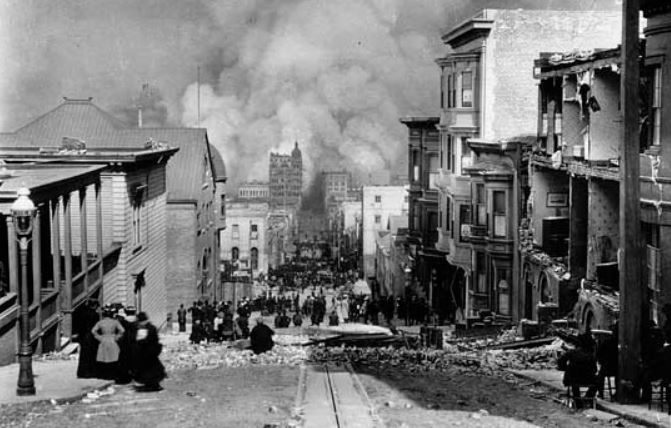
San Francisco, 1906

San Francisco, 1906

He was right, but at the time, it seemed that earthquakes, with their enormous destructive force, caused rocks to break and faults to appear. Quite obviously, earthquakes shear buildings and split streets. But Dutton was seeking the deeper cause, the force that actually generates earthquakes. This drive to understand the phenomenon really came to the country’s attention after the San Francisco earthquake. Geologists decided to map, measure, photograph, and trace all the faults they could in order to identify possible future dangers. Industrialist, robber baron, and philanthropist Andrew Carnegie stepped forward with cash for the Lawson Commission when government money didn’t materialize. The Commission’s goal was to try to understand and hopefully predict future events. From their studies, the geologists discovered that the San Francisco quake, and similar ones, occurred along pre-existing fault lines. They showed that the Earth’s crust slowly bends until it is suddenly returned to an undistorted position with the violent snap that creates an earthquake – exactly what Dutton had speculated.

Just before the 1906 San Francisco earthquake, Major Clarence Dutton wrote the best textbook about earthquakes up to his time. Dutton was a gifted writer and his book, Earthquakes in the Light of the New Seismology, does not disappoint. It reads like a novel and includes this passage about the earthquake experience:

“When the great earthquake comes, it comes quickly and is quickly gone . . . a matter of seconds. . . The first sensation is a confused murmuring sound of a strange and even weird character. Almost simultaneously loose objects begin to tremble and chatter. Sometimes, almost in an instant, the sound becomes a roar, the chattering becomes a crashing. The rapid quiver grows into a rude, violent shaking of increasing amplitude. Everything beneath seems beaten with rapid blows. . . Loose objects begin to fly about . . . the shaking increases in violence. The floor begins to heave and rock like a boat on the waves. The plastering falls, the walls crack, the chimneys go crashing down, everything moves, heaves, tosses. Huge waves seem to rush under the foundation with the swiftness of a gale. . .”

Dutton continues this description until the house is gone. “Or,” says Dutton, “suppose we are out in the country and the earthquake comes suddenly upon us. The first sensation is sound, a strange murmur. Some liken it to the sighing of pine trees in the wind; others to the distant roar of the surf; others to the far-off rumble of the railway train; others to. . .”  Well, you get the idea.

We celebrate Major Clarence Dutton. He was an engaging writer, intrepid explorer, and brilliant geologist – even if his legacy includes the difficult to digest idea of isostasy.
Posted in Biography, Geology, History | Tagged , , , , , | 2 Comments

Solid to the Core

Choco-earth; choco-moon: both are equally edible.

Choco-earth

The Earth is like a chocolate-covered cherry. A bit bigger and harder to eat in one bite, but there are similarities. Like a cherry, the core is solid, but floats in a liquid. Next comes a thick layer of creamy fondant (in the candy) or mantle (in the Earth). Top this with a thin layer of crusty chocolate or crusty crust. Understanding the layers has been a slow process of earth-awareness. It was long obvious that the surface is solid and volcanoes suggested that something runny lies just beneath. Perhaps the biggest breakthrough in understanding the planet came from Sir William Gilbert who used magnetism experiments to figure out that the Earth has an iron core. That was around 1600 and not much happened for 300 years, as far as discoveries about the layers beneath our feet are concerned.

One of the first modern advances in understanding the Earth’s structure came in 1914. Beno Gutenberg, a German-born American, used the travel paths of earthquake shock waves to deduce that the center of the Earth is liquid. Earthquakes send seismic waves along the crustal surface – these, of course, knock down cows and houses. But at the same moment, two types of seismic energy (shear and pressure waves) travel downwards and pass through the Earth, emerging at distant parts of the globe. When they do, shear waves skirt a huge section of the inner Earth. They seem to disappear, causing a shadow zone on the opposite side of the planet. Gutenberg realized that the ripping, sideways-shaking shear waves would not pass through a liquid. He proposed, therefore, that the core of the Earth was a fluid. He was about half right.

Gutenberg’s discovery matched the 1914 data he worked with, but within a few years newer data made his hypothesis less sound. He had calculated a large, totally liquid core, but soon, seismic data from advanced seismometers didn’t quite fit the model. Although the shear waves were certainly missing, some of the pressure waves that passed through the core were emerging at unexpected places on the surface.

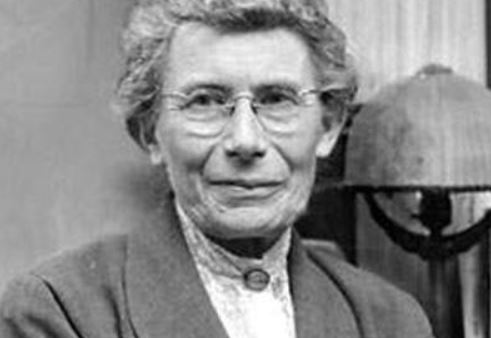
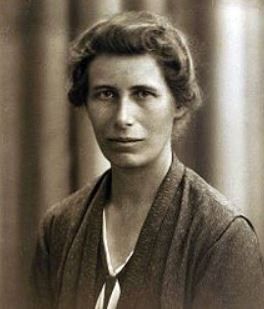
Inge Lehmann, 1935

Inge Lehmann, 1935

A remarkable Danish geophysicist, Inge Lehmann, fixed the discrepancy by theorizing that there are two different parts to the liquid ball which Gutenberg had imagined. An inner core was deflecting some of the seismic energy, allowing it to appear as the shadowy signals found on more modern records. She was right. Today is the 127th anniversary of Inge Lehmann’s birth. In 1936, at age 48, Lehmann made the discovery that the Earth’s center was not one homogenous ball of fluid. There are both inner and outer cores.

Lehmann’s father was an experimental psychologist who placed Inge in a progressive school run by Hannah Adler, the aunt of Nobel-winning physicist Neils Bohr. Lehmann credited her math and science skills, her creativity, and her perseverance to Hannah Adler’s gymnasium and to her father’s encouragement. She studied mathematics in her hometown at the University of Copenhagen, then attended Cambridge in 1910, at age 22. Soon she was mentally exhausted and left school to work at an insurance office for a few years, calculating actuary tables and premiums. Seven years later, she returned to Cambridge and completed her math and physics degree. With this, she returned to Copenhagen to assist a professor of actuary mathematics, but then she returned to work at another actuary office.

It would have been easy to expect Lehmann’s career to linger in a back room insurance office forever. Expectations and opportunities were not great for a female mathematician in the 1920s. However, she found work as an assistant to the Danish mathematician Niels Nørlund.  He placed her in charge of setting up seismological observatories in Denmark and Greenland. This was her first experience with seismic data, a field that demands clever math skills – which suited Lehmann very well. In 1928, she was accredited a doctorate in geodesy (the science of the Earth’s shape). Soon after, she accepted a position as Denmark’s state geodesist. She also headed the department of seismology at the Geodetical Institute of Denmark, which was led by Nørlund.

The discovery of the Earth’s inner core was a perfect convergence of a brilliant mathematician, a collection of appropriate data, and the vexing puzzle of errors in the model of Gutenberg’s liquid-core Earth. The appropriate data was from the seismic records she herself gathered from the network of seismic observatories she had spent years developing. Some of the world’s nastiest earthquakes happen in the south Pacific, a location that should render their energy mute when it arrives at her stations in Denmark. But instead she found the sneaky seismic waves exactly where they should not be. At first, she suspected equipment failure. But then she had her great idea.

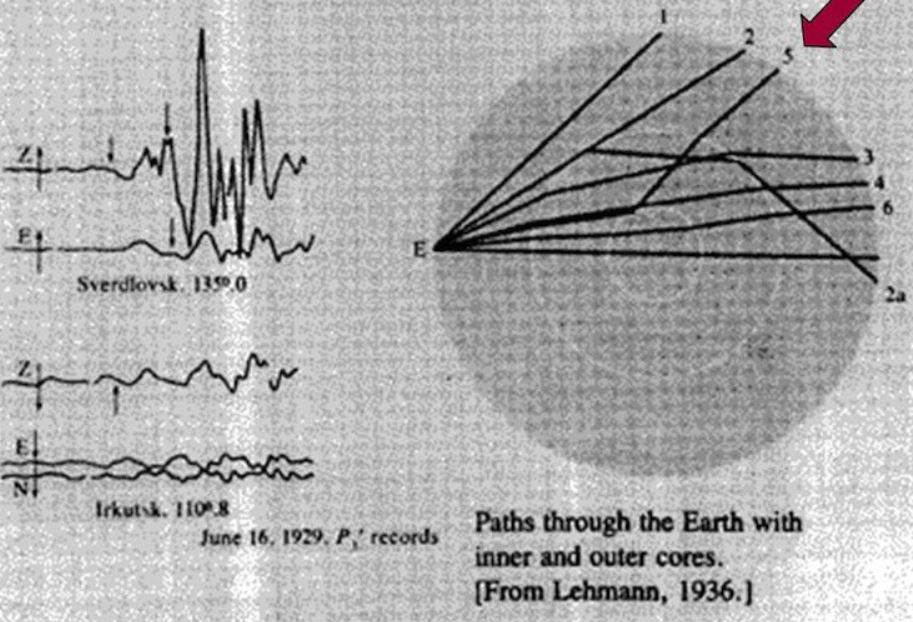
Attributing the seismic energy’s travel path to a boundary or interface within the core did not come to her in an inspirational flash. She spent years agonizing over the data, drawing little diagrams on bits of cardboard, filling notebooks with calculations. The solution finally emerged in 1936. She published her discovery in a paper named for the pressure waves that bent at a boundary within the core – she called the paper P’ (possibly the most succinct title for any scientific paper, ever).  Just for clarity – and not to take anything away from her amazing discovery – Lehmann did not claim that the inner core was solid in her landmark paper. She just recognized that there are both inner and outer cores which create the boundary that bends P-waves. It wasn’t until 1940 that Francis Birch and others realized the inner core was solid.

Ray paths of seismic energy, from Lehmann's 1936 paper, P'

Ray paths of seismic energy, from Lehmann’s 1936 paper, P’

Her discovery and her P’ paper were almost immediately accepted by most of the world’s geophysicists. One can almost feel the pain of 1,000 facepalms when the other scientists saw her work. Like many of science’s greatest discoveries, it is retroactively self-evident. But it was Inge Lehmann’s brilliance that brought the obvious forward.

Lehmann's new Earth model: from avocado to chocolate cherry

Lehmann’s new Earth model: from avocado to chocolate cherry

Lehmann’s work was far from over. She continued running the seismic observatories and worked at the university. But World War II, the German occupation, and Denmark’s isolation restricted her research for years. She was finally eligible for a full professorship, but was turned down – more likely due to her age (she was 64 when the missed opportunity came) than her gender. So, in 1953, Lehmann crossed the Atlantic to work with the indefatigable Maurice Ewing at his huge Lamont Geological Observatory in New York. She worked there for a number of years, investigating the Earth’s crust and upper mantle. Almost 70 (she lived nearly 105 years), her work led to the discovery of yet another seismic discontinuity, but a much shallower one than her inner-outer core boundary.

Lehmann, in the 1980s

Lehmann, in the 1980s

Lehman’s new boundary lies at depths between 190 and 250 kilometres. We call it the Lehmann discontinuity. It’s an interesting feature, but we aren’t really sure what it’s good for. The boundary is deeper than the better-known Mohorovičić discontinuity (upon which the crust glides), but the Lehmann hasn’t been associated with moving materials – not yet, anyway. There is a possibility that the Lehmann discontinuity is related to isolated plumes (such as Hawaii), but for now they are of a mysterious nature. Geophysicist Francis Birch noted that her discovery of the shallower discontinuity involved tedious techniques “by a master of a black art for which no amount of computerization is likely to be a complete substitute.” As much as the inner functioning of the planet, a human mind such as Inge Lehmann’s is also a wonder of nature. She made both of her amazing discoveries through mathematics and reasoning, deducing phenomena that occurs in a hot, dark, inaccessible place which no one will ever visit, unveiling mysteries using little more than pen and paper.

Posted in Biography, History, How Geophysics Works | Tagged , , , , , | Leave a comment

A Year of Mystery

I began writing this blog – The Mountain Mystery – exactly one year ago. So, as far as blogs go, this is a young one. It is a loosely cohesive collection of stories about the Earth. The only real themes around this place are a love of earth sciences and an occasional piece on the men and women who figured out where mountains come from (that’s the mystery). There really isn’t anywhere else that’s assembling a collection of vignettes about the nearly forgotten scientists who (just 50 years ago!) unraveled the mystery of mountain-building and showed that plate tectonics is the ultimate creator of all things high.

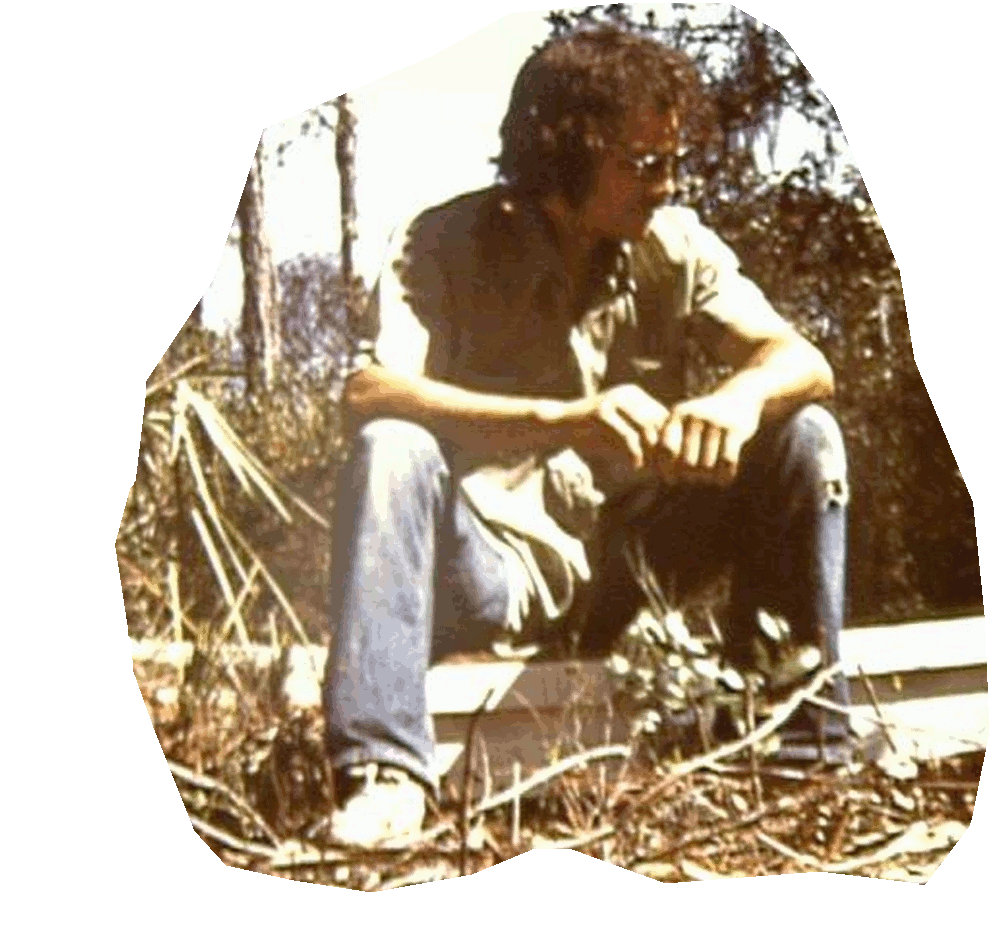
The author, hive sitting in Florida.

The author, hive sitting in Florida.

Since you are bothering to read this blog, you deserve to know a bit about the author. I was a Pennsylvania farm kid many years ago. We had honey bees on that farm so when I was 18, I  became a professional beekeeper by trade. That lasted for about 15 years. Those years were among my best – my bees produced a million pounds of honey and I sold it for them. In our exchange, I took the honey money they earned and I bought new boxes and new queens for those bees.  I helped them tour apple orchards in West Virginia, orange groves in Florida, and clover pastures in Wisconsin. The bees wanted to experience Saskatchewan when they heard that the sun always shined and bees always prospered on the wide plains – so I brought them to Canada.

Ron at Machu PichuEventually, the bees begged their freedom, so I left them and moved to Saskatoon, attended university, and earned an honours geophysics degree. Bessel functions, autocorrelation, and paleomagnetism were my thing. Among much else, geophysics took me on a magnetic survey looking for diamond-studded kimberlite pipes and took me to Peru where I taught something about seismic. Geophysics opened my eyes to the joys of critical thinking and scientific study – I hope a little of that comes through in this blog.

For these posts, my intention is to draw attention to the planet, the massive spinning rock we too often surficially take for granite. This old iron-hearted lady is much more than what meets the feet. She has great depth and many, many peculiar quarks.  I have a bit of curiosity about the history of scientific discovery, so I also occasionally write commentary on the way earth science became known. But in producing these postings, I quickly discovered that most readers of this blog are attracted to topics which stray towards controversy, especially  societal interference in scientific endeavours – the main theme of my book, The Mountain Mystery.

Among the 101 posts (85,000 words of pop-wisdom) published here in the past year, the relationship of science and society has comprised the most popularly read, linked, and commented material. My stories about Senator Cruz (Ted Cruz, the Science Guy), Stephen Hawking (The Theory of Everything), oil reserves in Cuba (Has Cuba Got Oil?), fracking (World’s Biggest Fracking Quake), and Russia’s warmongering in the Arctic (Russia’s Growing Pains) have been among the most visited. When I write about religion, evolution, pollution, and climate, my pages leap forward in the battle of the search engines. On the other hand, some of my articles on plate tectonics, magnetic rocks, and eighteenth century geologists have largely drawn yawns. Nevertheless, my first love has been science, so I will continue to bore the masses with tales of petrified bones and radioactive stones, even if only a few dozen people enjoy them – and even though they tend to be harder for me to research and write than the opinion pieces.

On the other hand, I will not shirk the responsibility of presenting and responding to controversy. I remind myself daily of the Greek lawmaker Solon who decreed it criminal for any citizen to avoid controversy. (I am guessing he grew up in a noisy household.)  Solon’s intention was to legislate community activism. That was around the year 600 BCE and his efforts led to the eventual invention of democracy. This blog will not invent democracy, nor even restore it to places where it is eroding – like Canada (where I live) or the USA (where most of my readers reside) although that is one goal. Hence, I will continue my political ramblings in this science blog for another year. Sunlight is a great sanitizer. And even a little artificial light sends cockroaches scurrying – as I discovered during my years of living in Florida.

Posted in Culture, Science Education, The Book | Tagged , , | Leave a comment

Created Last Thursday

Thursday

In business since last Thursday

It’s hard to argue with someone who says that the whole universe was created last Thursday.   Everything in its place, a stage built and actors entering. Is this the way you picture reality? I hope not – you would be deemed troubled and therapy would be offered. Your friends would hope for a speedy recovery. And yet, if you believed nearly the same thing – a fully intact universe aged 6,000 years – well, you just might get elected to the school board.

I thought about this when I read an awkward piece by a “young-Earth geophysicist” who clearly has a lot of explaining to do. To make all of the Earth’s physics fit into a half dozen millennia takes some clever scientific juggling. As a geophysicist, he was undoubtedly trained in geology and physics, especially things like radioactive decay, heat flow, and magnetism as they relate to the planet. A cornerstone of geophysics is continental mobility – formerly continental drift, now refined as plate tectonics. Few young-Earth geophysicists reject crustal movement because it has been measured with stakes in the ground. It is as hard to deny as a photograph of a hand in a cookie jar.

radioactive decayWhen we measure the age of rocks by calculating the amount of radioactive decay that has taken place, we prove that we live upon a very old planet. I will not review the definition of half-life nor describe how the various elements and isotopes transform. I discuss this elsewhere on these blog pages. You probably already know a good deal about it, but the key is that about ten different isotopes differently disintegrate into about ten other isotopes over periods varying from millions to billions of years. Because a variety of unrelated decaying materials transform at different paces, we have multiple, corroborating evidence that the world is over four billion years old. It is like having several photographers capturing the cookie jar hand from several angles.

To claim that the corroborating radioactive evidence pretends the Earth is 6,000 years old rather than several billion requires a complete suspension of physical laws. Some young-Earth geophysicists are quite happy to contort the data and tell us that in the recent past, radioactive decay happened very rapidly but it has slowed down in the past few hundred years. Others don’t mess with varying the decay rates, they simply claim that the universe was assembled with partially decayed assemblages of isotopes. In that case, the Earth could have been put together very recently. Last Thursday, in fact.

zebraAnother issue that makes the young-Earth geophysicist’s life difficult is the zebra-striped magnetic pattern on the ocean floor. As crust is created at spreading rifts, it cools and retains the orientation of the Earth’s ever-oscillating magnetic field. Because the embedded magnetism is either positive or negative, the variations are often depicted as black and white zebra stripes.

Correlating such things as radioactive decay, heat dissipation, and the age of fossils atop the blocks of parting oceanic crust (fossils near an oceanic rift are young; those farther away are increasingly older), geophysicists have calibrated the age of the magnetic pole reversals. Magnetic orientation switches every million years or so, meaning that the planet’s magnetic field also reverses direction at roughly million year intervals. But for the young-Earth model to work, the zebra-striping has to switch every few decades. Otherwise you can’t squeeze so many reversals into just 6,000 years. If you could, this would mean that many senior geophysicists have first-hand experience with global magnetic reversals. We don’t – trust me, we’d remember.

Consternating even more ruminations among the young-Earth geophysicists is the issue of moving continents. The average rate of crustal motion is about 2 or 3 centimetres (an inch) each year. We know this because we’ve measured it. Even young-Earth geophysicists agree with the evidence of split supercontinents and the Wilson Cycle of ocean basins. To claim that the Atlantic Ocean was built in fewer than 6,000 years,  such miscreant geophysicists require Europe and America to pull apart at a rate of about a kilometre a year, requiring phenomenally energetic mantle circulation. The amount of energy required to shift so much lithic material would generate enough heat to boil the oceans and melt the entire surface of the planet. After that, the crustal plates have to suddenly slow to 1/50,000 the speed to match what we observe today. And they would have to cool enough to support life. No wonder they call their idea Catastrophic Plate Tectonics.  It is hard to explain how 40-kilometre-thick slabs of continent could zip along, melting the Earth’s surface, then suddenly slow to a near standstill. Actually, it is impossible to explain. However, there is an easy solution – the universe was created last Thursday. It just looks much older.

Posted in Culture, How Geophysics Works, Non-drift Theories, Plate Tectonics, Religion | Tagged , , , , | Leave a comment

Smokers and Worms

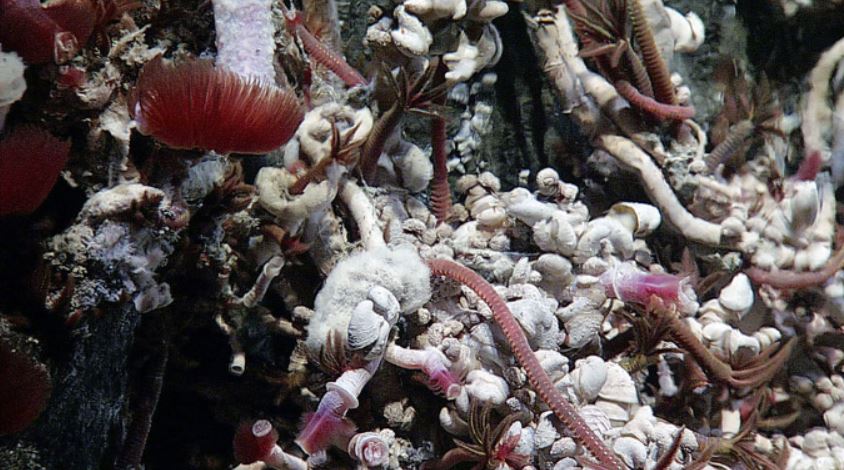
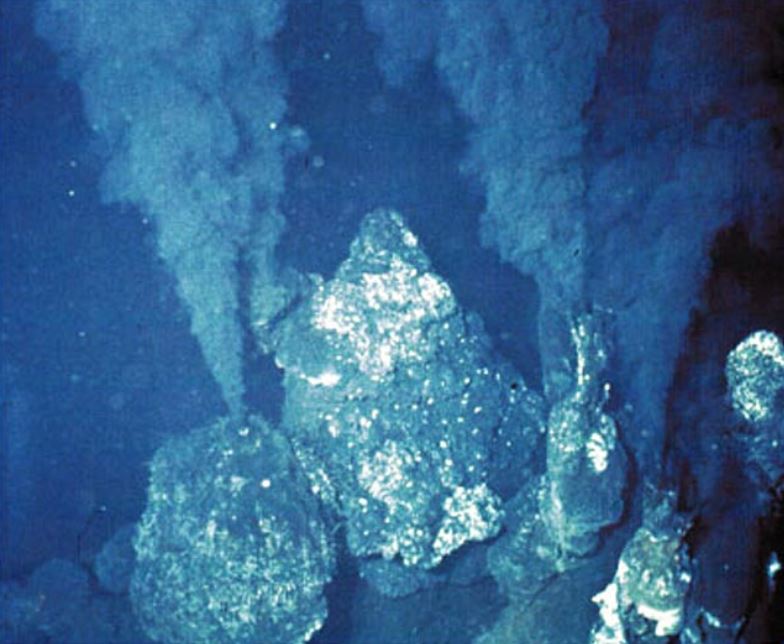
A smoker's lifeU of Washington photo

Tube worms: a smoker’s life
U of Washington photo

If all life on the surface of the Earth died, who (or what) would mourn the loss? Not such a hypothetical question. A miscreant meteor could end our little party in a flash. But there is a rather good chance that deep, deep, deep below the waves life would carry on. In fact, about a thousand kilometres west of my laptop, hot volcanic smokers at the Juan de Fuca ridge are generating energy and nutrients for giant tube worms who may one day inherit the keys to our cottage.

This week we had explosive news about the latest eruption of a seamount which rises smack-dap atop Juan de Fuca’s spreading rift.  It’s the youngest piece of a long volcanic chain of bumps that stretches from Alaska’s Aleutians to the ocean floor off the Oregon coast. The seamount chain seems to be generated by a fixed ‘hot-spot’ which has been making a string of volcanoes for millions of years while ocean crust has passed overhead.

(Here we are talking about two different sorts of geology: rifts and hot spots. They do not normally coincide, but in this peculiar case, they do. Seamounts are conical volcanoes thought to be rising from hot spots; rifts are long narrow chasms that shove crust apart. It is a rare coincidence that the two occur at the same location, as they do at the tail end of the Cobb-Eickelberg Seamount chain.)

Geophysicists at the University of Washington were rather pleased that they could predict the Axial Seamount eruption. Their prognostication was based on the ebb and flow of pressure and the resulting inflation of the mount. When it reached critical parameters, the scientists predicted the blast and the volcano obliged. I am hoping that the spew doesn’t hurt our wormy cousins at the hydrothermal vents.

The deep-sea rift vents (and possibly the new conical volcano) are spewing steamy nutrients that could feed the Earth’s last great hope for survivors of Armageddon. The smokers, as some of the vents are called, are spewing super-heated water which, under pressure, is several hundred degrees hotter than neighbouring seawater. These geysers lift minerals, including sulfides that seem to be a favourite snack for some odd types of bacteria. The bacteria, in turn, are eaten by a variety of predators. An entire unique realm of life has developed in the blackness of the deep ocean bottom, far from sunlight and surface influences.

Black Smokers, off American west coast in the PacificUS Gov't photo: NSF

Black Smokers, off American west coast in the Pacific
US gov’t photo: NSF

The vents, geysers, and smokers were discovered in 1977. They create an amazing seascape. While most of the deep ocean is unnervingly quiet, the sea smokers are a haven for bizarre wildlife. An unmatched ecology exists there, totally disconnected from the sun’s energy. At such a depth, the Earth’s core itself is animating a realm entirely independent of the rest of us, providing life-sustaining energy. Among its bizarre creatures, the Pacific has giant tube worms, some as tall as an adult human. These live in superheated hydrosulphuric-laden water bubbling from the boiling sea geysers.

Rather than eating the bacteria thriving near the vents, about half of a tube worm’s weight is composed of those friendly microbes. In their symbiotic friendship, tube worms suck passing particles of hydrogen sulfide, carbon dioxide, and minerals from the hot vents and pass these as food to the bacteria adhering to their bodies. Lacking a digestive tract, the worm feeds the bacteria, then ingests the bacteria’s excreted organic material. The tube worm turns this into more tube, thus attracting more bacteria.

For us, there should be comfort in knowing that this distant and distinctly alien environment exists. We have no need to fear the total annihilation of all of Earth’s life. After being pelted by an asteroid, or suffering a cataclysmic volcanic event, our planet’s crust may melt, the atmosphere may evaporate, surface life may vanish. But two kilometres below the sea’s surface, giant tube worms will flourish undisturbed near the planet’s mid-ocean rifts. Life on Earth will continue. And on that cheery note, we bide you a good day!

Posted in Geology, Oceans | Tagged , , , | Leave a comment

Back to Katmandu

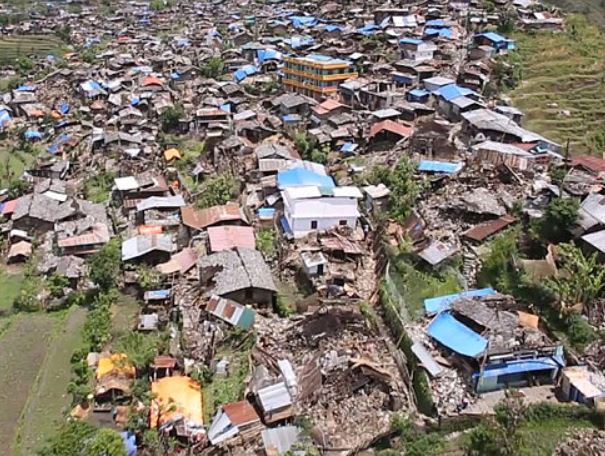
Barpak, Nepal - the day after the quake that killed thousands.

Barpak, Nepal – the day after the quake that killed thousands.

“The ATMs aren’t working. My cell phone gets a signal for just an hour a day – but I keep trying over and over again. When the battery runs out, I don’t know what I’ll do – there’s nowhere to charge it. And I don’t know where the rescue planes are.”

Thus are the lugubrious grumbles of a western thrill-seeker, a mountain climber, who is now begging for a plane to take him out of Nepal. He wants to get back to civilization. The yogists, trekkers, and climbers (some of whom paid $60,000 to be dragged up Mount Everest) were whining about the hardships they were facing and wondering why their embassy wasn’t getting them home.

I realize that it was the second day after the earthquake and richly spoiled westerners were in shock, saying things to the camera crew that they would have said differently if they had not been so shaken. But the theme was repeated again and again. They wanted to go home and they were dismayed that their government was not making it happen fast enough.  The Canadian government obliged. I saw a clip of Canadians seated on a huge Hercules cargo plane which had just been emptied of food and medical supplies. It was departing with home bound tourists and trekkers. These people were clutching their yoga mats and their hiking boots and getting a ride out.

To be fair, there were undoubtedly some visitors to Nepal who stayed to help. Some of those fleeing had small children and others had been injured. Some certainly couldn’t help. (I can imagine myself – in my wheelchair – manning a phone, perhaps, but otherwise being more of a liability than a help.) Nevertheless, some of those heading home were complaining that their holidays had been rudely interrupted. It is likely they didn’t understand the scale of the devastation that had struck Nepal.

There is the rubble of a thousand buildings that needs cleared and sifted for survivors and bodies. Over 6,000 people are dead. There are families to help. And there are a few volunteers who have arrived in Nepal with exactly these thoughts in their minds.

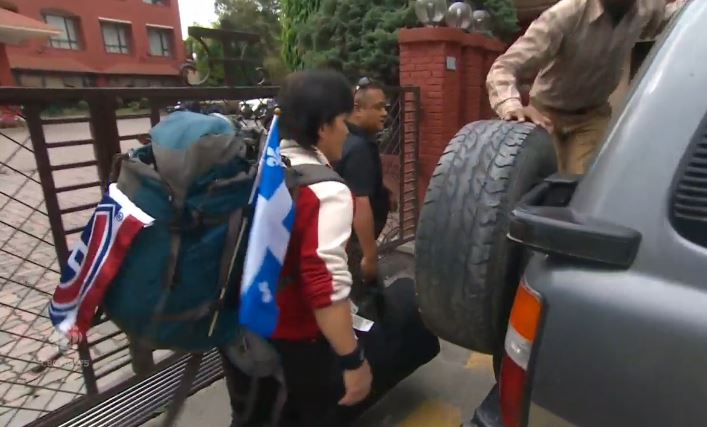
A Canadian in Nepal

A Canadian arriving  in Nepal

I’d like to note one person who dropped everything, rounded up as many medical supplies as her bags could hold, and raced from Montreal to Katmandu. Canadian JeanetteWithout a sponsor, without wads of cash, with no NGO leading the way, Jeanette left Canada as quickly as she could. She is now in the village of Lanagol, Nepal, doing what she can.

She is in a bit of a different position – a paramedic by training, she had been to Nepal in the past as a visitor. Since then, she had returned a few times to teach emergency medical care. There was no question in her mind that she needed to go to Nepal quickly.

You can see her story here.

Posted in Culture | Tagged , | Leave a comment

The Man on the Moon

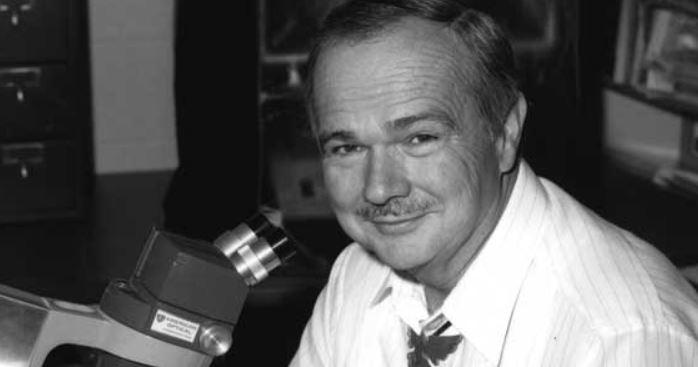
Eugene Shoemaker is the only man on the moon. It’s his birthday, he would be 87 today, but he won’t know it. Shoemaker has been dead for almost twenty years. His ashes have been on the moon since 1997.

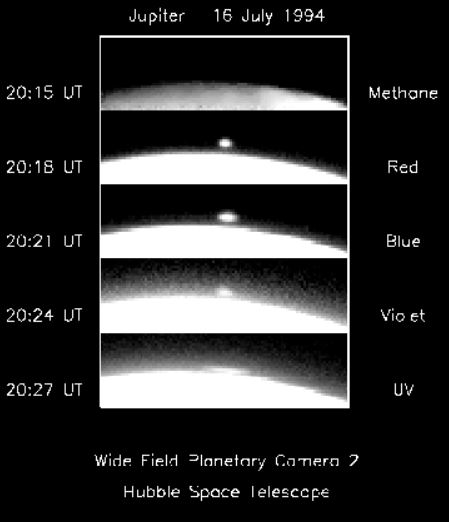
Shoemaker-Levy comet impacting Jupiter. Hubble Space Telescope image.

Shoemaker-Levy comet impacting Jupiter.
Hubble Space Telescope image.

Unless you are a bit of a space junkie, you likely never heard of Shoemaker. He taught geology to Apollo astronauts (so they’d know which moon rocks to bring home) and, along with his wife Carolyn and their friend David Levy, he co-discovered the Shoemaker-Levy comet that spectacularly plunged into Jupiter back in 1994, to the great delight of amateur stargazers with scopes focused on the red planet. It was the first observed celestial impact and it informed us greatly about what happens when comets crash into Jupiters.

Shoemaker’s father was a Nebraska farmer; his mother taught school. Shoemaker earned his unusual astrogeology PhD at Princeton in 1960 and the next year he founded the Astrogeology Research Program for the U.S. Geological Survey.  Within a couple of years he caught the attention of Scientific American and wrote a piece (The Geology of the Moon) for them in 1964. It included this justification for the study of astrogeology:

“We expect that the study of lunar geology will help to answer some longstanding questions about the early evolution of the earth. The moon and the earth are essentially a two-planet system, and the two bodies are probably closely related in origin. In this connection the moon is of special interest because its surface has not been subjected to the erosion by running water that has helped to shape the earth’s surface.”
– Shoemaker, 1964

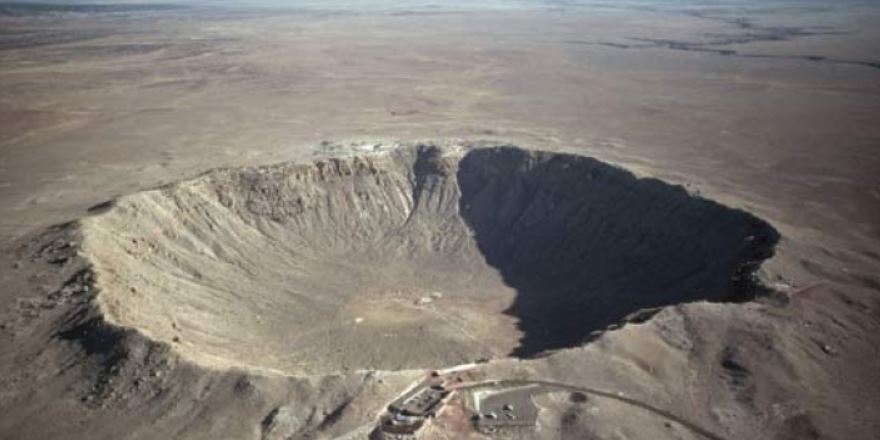
In Arizona, Gene Shoemaker led astronauts around Meteor Crater and Sunset Crater, giving the space cadets some crater experience. During the lunar Apollo missions, he moonlighted on the air with Walter Cronkite’s CBS news coverage, giving stellar commentary.

Meteor Crater in Arizona: an Apollo training ground

Meteor Crater in Arizona: an Apollo training ground

Eugene Shoemaker

Eugene Shoemaker 1928-1997

Shoemaker was a relent- less investigator. He traveled the world looking for pieces of other worlds – meteorites that might cede clues about the stony landscapes that reside overhead.

He also restlessly pursued craters on the Earth – such impacts led to his analysis of microscopically unique shocked quartz (coesite) and the craters helped him understand the mechanics and products of impact collisions.  It was a trip to Australia at age 69 that found him driving a car across the desert northwest of Alice Springs with his wife. He was seeking yet another crater to examine. On a forlorn stretch of a rutted trail, he rambled along at 80 kilometres an hour, hugging the safe smooth center of the road. He met another vehicle, approaching from the opposite direction. The Australian driver approaching him pulled hard to the left to miss Shoemaker’s car. Unfortunately, Eugene Shoemaker was an American driver – at the same instant, he veered sharply right to avoid a collision, which caused him to crash head-on into the other vehicle. He died; his wife was badly injured.

Almost exactly two years later, on July 31, 1999, his ashes were carried to the moon by the Lunar Prospector space probe. Shoemaker is the only person whose ashes have been placed on the moon – he remains our only man on the moon.

Posted in Biography, Exploration, Geology, History, People, Space | Tagged , , , , , | 2 Comments

Katmandown

Katmandu’s earthquake was a tragic surprise; but not unexpected. Katmandu sits atop a fault that releases pressure as continental crust merges. India, which was an island until 25 million years ago, continues shoving itself into Asia. This sparring of continents cost at least 3,400 lives this weekend when the pressure of the grinding plates was released in a 7.8 magnitude earthquake. The incessant south Asia continental clashing has built the Earth’s grandest mountain range – the Himalayas. This time, tectonic force lifted and dropped Katmandu 3 metres (10 feet!) south of where it was a week earlier. The quake ripped a gash along the surface stretching over 100 kilometres from its shallow epicentre. All of this happened in less than 90 seconds.

Katmandu temple: 2014, left; 2015, right

Katmandu temple: 2014, left; 2015, right

Lamjung, Nepal.

Lamjung, Nepal. (Photo by Bishwo Ghimire)

In Nepal’s capital, Katmandu, temples and shrines were destroyed, apartment blocks were leveled, and most of the several thousand deaths in Nepal occurred there. The earthquake, however was centered about 100 kilometres west, near Lamjung, an alpine farming district. Most recovery and emergency operations have focused on the more populated capital, so it is not known how desperate things are for people who live in Lamjung, atop the epicentre. Another site garnering attention is, of course, Mount Everest. It is even farther away from the quake centre (about 220 km), but it has name recognition – and among the 18 known deaths at Everest are westerners, most of whom were there for the sport of climbing the mountain. Avalanches caused by the earthquake caused the deaths at the Everest base camps; these have been heavily covered by the sometimes myopic western news media.

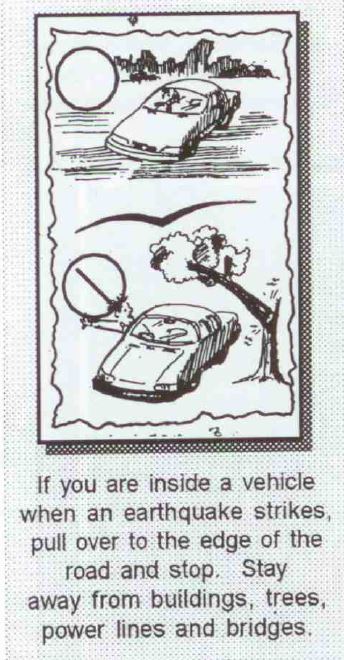
http://geohaz.org/news/images/publications/KathmanduEarthquakeScenario.pdf

Excerpt from Geohazards International handbook for Katmandu earthquake preparation.

This earthquake was certainly expected, though the exact moment of its arrival could not be foreseen. A few years ago, the non-profit Geohazards International had published a lengthy document, Katmandu Earthquake Scenario, which predicted in painful detail the events unfolding today in Nepal. The charity organization assesses geophysical hazards around the world and it ranked the Katmandu Valley highest among its “risk per capita” stats. Their 32-page booklet was generated to prepare people for the inevitable. It is a powerful read, written in simple English, and it walks us through a moment-by-moment encounter with a potential Katmandu earthquake.  On impact, “school children are crouched under their desks, waiting for instructions from their teachers. Doctors and nurses are helping the most seriously ill patients to protect themselves and are preparing to evacuate the hospitals. Drivers in automobiles pull carefully off to the side of the road, waiting for the shaking to stop. . .” The document gives practical advice, encourages drills and exercises, and follows through the next hour, day, week, month, and year describing what victims should expect after a major Katmandu earthquake. The report discusses medical aid, water, food, electricity, and psychological recovery related to the survival of those affected. If you are thinking you should help, consider a donation to Geohazards International – they seem a worthy outfit. In fact, they have people in Nepal who were already assessing hospitals just hours after the earthquake struck.

Meanwhile, the recovery enters its third day. Poorly built structures (many apartments had unreinforced cement and weak masonry) and the disrupted water and electricity are continuing to take their toll.  At 7.8, this was the largest magnitude earthquake the area has experienced in 80 years and aftershocks as large as 6.7 (also severely destructive) are continuing. Katmandu will recover and rebuild – we hope that the new construction will be designed to withstand similar earthquakes. And we hope that drills and emergency exercises will continue to be part of daily life for the Nepalese. Such practice saved a few lives last week, it will be even more helpful in the future.

Map prepared by Geohazards International, using US Geological Survey information.

This map, prepared by Geohazards International, using US Geological Survey data, indicates the Katmandu Valley was most severely hit. Epicentre is shown centre-left and Mount Everest is top-right on this map.
Follow this link for a larger-scale map.

.

.

Posted in Geology, Plate Tectonics | Tagged , , , , , | Leave a comment

Sit on a continent, go for a ride.

My continent moves at a nail's pace. This is what it did since 2009.

My continent moves at a nail’s pace.
This is what it did since 2009.

Of course you know about plate tectonics. Sit on a continent, go for a ride. You were probably told in grade school that continents move with as much speed (and unstoppable determination) as your fingernails are supposed to grow. That’s more-or-less true, unless we use the East Pacific Rise Plate as our model – it moves much faster and that would imply that you have wicked claws. The average speed  for continental motion is two centimetres per year, but you could get dizzy riding the East Pacific Rise –  every two years it moves the width of a charter airplane seat.

These motions are not all smooth sailing. On some parts of the planet, sudden jerks result in horrendous earthquakes. The mid-sized Nazca Plate is grinding itself under South America at a rate over 8 centimetres a year. Its movements are not steady. These are not the progressions of plodding oxen, but rather the leaps of a kangaroo. Sometimes the abrupt jumps are astonishing. I narrowly missed experiencing a violent three-metre crustal leap during the 2010 Chilean earthquake. Near the epicentre, the town of Concepción moved the length of a car in a single lurch as one tectonic plate climbed over another. Now that it has jerked ten feet, it will probably not move again for 50 years. Elsewhere (Iceland, for example) the ground is fairly steadily ripping apart. The place has volcanoes (Eyjafjallajökull kept me in central Europe for a week in 2010 when all flights home were grounded.), but Iceland has few serious earthquakes. However, the island nation is simply  slowly ripping apart.

Plate Motion Table  I thought it would be interesting to see how my part of the world is creeping along under the power of plate tectonics. I found a plate-motion-calculator on this UNAVCO site.

UNAVCO describes itself as a non-profit, university-run “consortium that facilitates geoscience research and education”. Until today, I had not heard of them. They seem to provide massive quantities of GPS-measured plate motion data. You can download huge files collected from around the world and use them to make your own discoveries.

On the page at the end of this link, you will find a rather complicated-looking form that lets you type in your latitude, longitude, elevation and much, much more. There are actually 25 fields in which you may enter data, but I ignored almost all of them. You can see in the image above that I simply input my Calgary latitude and longitude (51 N and 114 W, which needs entered as minus 114 to designate the western hemisphere). The database returned the drift of my house. Calgary seems to be averaging 1.940 cm/year, in a southwestern direction. This is slower than most places on the planet, which surely explains why Calgary is famous for its lack of vertigo epidemics. The velocity from UNAVCO’s website is shown to you in a table, or in a download file, if you prefer. You can see my results here:

Calgary Plate MotionI ran the program again, using Vancouver’s location. Vancouver, about 700 kilometres west of us, had an almost identical result: heading southwest at 1.993 cm/year. Vancouver is apparently outrunning Calgary at a rate of half a millimetre per year. Not much chance of western North America ripping apart somewhere along the TransCanada Highway within my lifetime. However, I did a third measurement, 200 kilometres west of Vancouver and found quite different values. The ocean floor beneath the Pacific (the Juan de Fuca Plate), just off Vancouver Island, is approaching Vancouver at 2 cm/year, heading precisely northeast. This, of course, is already well known and amply documented and it explains earthquakes along the famous west coast subduction zone. Yesterday, in fact, a 6.1 magnitude quake shook the Haida Gwaii region, just north of Vancouver Island.

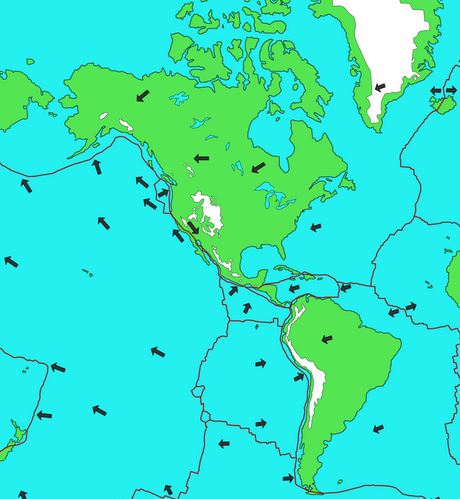
I hope you have time to enter your hometown’s location and some of your favourite cities. I input a few more: New York City, northwest at 1.52 cm/year; London northeast at 2.47 cm; Tokyo northeast at 2.92; Kolkata northeast at 5.52; Beijing east-southeast at 2.96 cm/year. By the way, if you enter locations on the African plate (say, Cape Town, for example), you get zero motion. Not that Africa is exempt from plate tectonics – it is moving, of course. But all the preceding motions are with respect to Africa – geophysicists general choose to use that continent as the reference. Hope you take a few minutes to discover your own continental motion.

Arrows indicate plate movement with respect to the African Plate.

Arrows indicate plate movement with respect to the African Plate.

Posted in Geology, Plate Tectonics | Tagged , , , , | 1 Comment

Curse of the Petrified Tree Trunks

hillbilly carSummer driving season is creeping up on us and the world’s national parks want to again warn visitors that removing protected rocks and artifacts can get you into big trouble. With the government, of course. But even worse, you may find yourself in deep doo-doo with the spirit world.  People regularly have really bad luck after they’ve stolen rocks from public places. It’s a world-wide phenomenon with hundreds of stories of disease, disaster, and financial ruin befalling tourists who have brought back special (and very cheap) souvenirs from Hawaii, Australia, the Vatican, and Arizona, among other places.

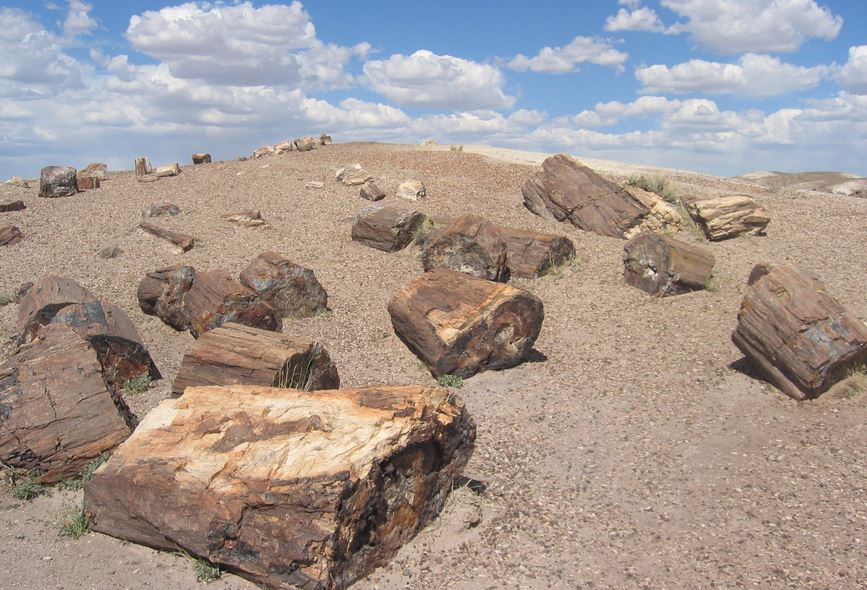
A recent book, Bad Luck, Hot Rocks, printed by the artsie publisher The Ice Plant, uses stunning pictures of stolen petrified tree trunks to document the misfortune and regret that besets visitors to Arizona’s Petrified Forest if they exit the park with illegal ballast in their boots. Judging from letters reprinted in the book, people have written annoyingly contrite confessions to the National Park Service – and sent back the stolen loot. “My wife left me and the dog died within months,” writes one felon-in-training in a typical note accompanying a fist-sized bit of smokey quartz and sparkly amethyst tree bark fossil.

Arizona's Petrified Logs

Some of Arizona’s Petrified Logs

The park has accumulated a small pyramid of returned pieces of their 200-million-year-old stoned forest. They dubbed the prodigal stones The Conscience Pile. Unfortunately, once a rock is stolen, taken home to New Jersey, then returned via the US Postal Service, the rocks are useless to the park. They can’t be carted back into the petrified forest – an artifact of any sort looses most of its value the moment it is callously dislodged. So the arrivals are stashed atop that conscience pile of stoners. Likely, though, the streams of bad luck haunting the thieves is stanched as soon as the rocks are riding postal planes back to the desert. That’s usually the reason for surrendering the goods. Some people realize they were wrong and made a mistake by stealing the bit of ancient Americana, but most returns are made in an attempt to alleviate self-inflicted bad karma.

Arizona Red Wood

Arizona Red Wood

The Petrified Forest People have claimed that 12 tonnes of petrified tree are pilfered each year. I doubt the amount is that large. If the average theft is two kilos, that would mean six thousand people take illicit souvenirs annually. I refuse to believe there are that many dishonest people in the USA. Neither does the parks service, I guess, because they have recently reduced their estimate of the amount of petrified tree trunk that is stolen. However, they continue with random checks of cars exiting the national park and they enforce a heavy fine against any apprehended ne’er-do-wells.

Elsewhere in the States, Hawaii has also been targeted by sacrilegious thugs. The goddess Pele is deeply offended if people scoop up black beach sand or pumice that she has violently coughed up over the past million years. You see, she believes that every grain of her exhausted magma is one of her children. In response to the wanton kidnapping, Pele sends evil spirits after the plunderers.

The folks running one Hawaiian website offer to ceremoniously return materials pilfered from Pele. The site runs a priestly confessional booth. Follow that link to see the innumerable tragedies that have cursed the existence of hapless souvenir collectors. Here is an example from their site (and remember, this could be you!):

Please return these stones to Pele. We’re very sorry that we took them and should have realized the mistake before we left the island. Shortly after we got back to California, I got a cold which is still with me even more than five weeks later. Also, I hurt my shoulder while working out, and my television blew up, and a 100GB hard drive on my computer (which is less than a year old) just died today. I’m doubtful that the hard drive can be repaired, and there is a great deal of data on it which cannot be replaced. I was planning to return the stones myself next year, but given the current rate of bad luck, I’m not sure I’ll be alive that long. Anyway, please express our apologies to the Goddess. I even had a dream the night after we took the stones, and I think that maybe she was trying to warn me not to leave the island with them, but like an idiot, I misinterpreted it. It didn’t occur to me what we’d done until after we’d already gotten back and the bad luck started to happen. In any case, thank you for this service. J.V., San Bernadino, CA.

Similar tales of woo and woe originate from Uluru, the rock briefly known as Ayer’s, in Australia. Many locals believe it is a holy rock, but invading sun-burnt visitors pound grappling hooks into the monolith, hoist themselves up to photo-op positions, and chip off souvenir chunks of red sandstone. Such heathen tourists are followed home by relentless spirits who proceed to destroy the offender’s lives. Again, horrific tales of stuffed sinuses, lost loves, and dead pets abound.

Einstein's tongueOn a rather different level, I think that the most gutsy klept of an unusual souvenir was Einstein’s brain, lifted from the great man’s head the day after he died. The pathologist at Princeton Medical Center took it without permission (but later received an unenthusiastic approval from Einstein’s son). The unfortunate physician hoped he could study the brain, discover the secret to brilliance, and publish a relatively special paper. Instead, Dr Thomas Harvey lost his job, lost his marriage, spent his retirement years working in a plastics factory, and ended up keeping the segmented neural mass of the century’s smartest scientist in mason jars in his Kansas home. Further, Harvey had a dwindling supply of gray matter – he occasionally sliced off slivers of Einstein’s brain on a wooden chopping block with his kitchen knife and doled them out to esteemed visitors. Don’t believe me?  There’s video.

What’s with these vengeance-seeking ghosts that hex and curse? It may have something to do with the way humans link causes to effects. We tend to congratulate ourselves for our successes, but look for some obvious scapegoat for life’s little failures. If we’ve found a perfect mate, earned a big promotion, or landed a great contract, we don’t attribute such success to a lucky piece of petrified wood stolen a few years earlier. But when things go painfully wrong, we know without doubt it wasn’t us – it was that stupid bit of fossil tree trunk in the kitchen junk drawer that did it. This is classic post hoc ergo propter hoc fallacy, and we all fall for its comforting logic from time to time.

By now you know the risks and can make up your own mind about what to do with your fingers while you are visiting a shrine. If you decide to go the cheap souvenir route and are flying home, for God’s sake, mail the rocks – don’t carry them on the plane with you. If you already have a stolen rock in your possession and things have been going poorly, you can apply logic and recognize it as a coincidence. Or maybe the only safe and decent thing is to give the cursed rock to that university that rejected your entrance application years ago. Or just fashion it into jewelry and send it to the ex-lover who dumped you shortly after you brought the souvenir home.

Posted in Culture, Geology, Religion | Tagged , , , , , | Leave a comment