Heresy without Redemption

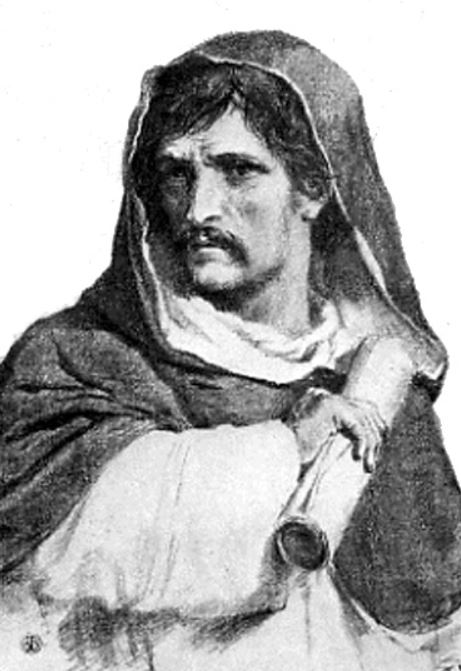
BrunoToday’s date, February 17, coincides with the day they killed Giordano Bruno. For years, he had been imprisoned for blasphemy, for practising magic, and for heresy.  Execution was recommended, though he could have had a less tortuous death had he confessed to those charges. “I neither ought to recant, nor will I,” Bruno said.(1)  So on this February day in 1600, they tortured the former priest, philosopher, mathematician, astronomer. Iron spikes were driven through his jaw, tongue, and palate. Bruno was pulled through the streets by a hooded, chanting group known as the Company of Mercy and Pity. He was stripped of his clothes, tied to a stake, and burned to death.

Born Filippo Bruno, he adopted the name Giordano when he entered the Dominican Order at a monastery in Naples, thirty kilometres from his family’s village near Italy’s western coast. Bruno was 17 when he began his studies in theology and metaphysics, and he became an ordained priest at 24. He was remarkably intelligent and gained considerable fame for his tricks of memory. His mnemonic gymnastics were rewarded with an audience before the pope where he performed well and ingratiated himself with the pontiff.
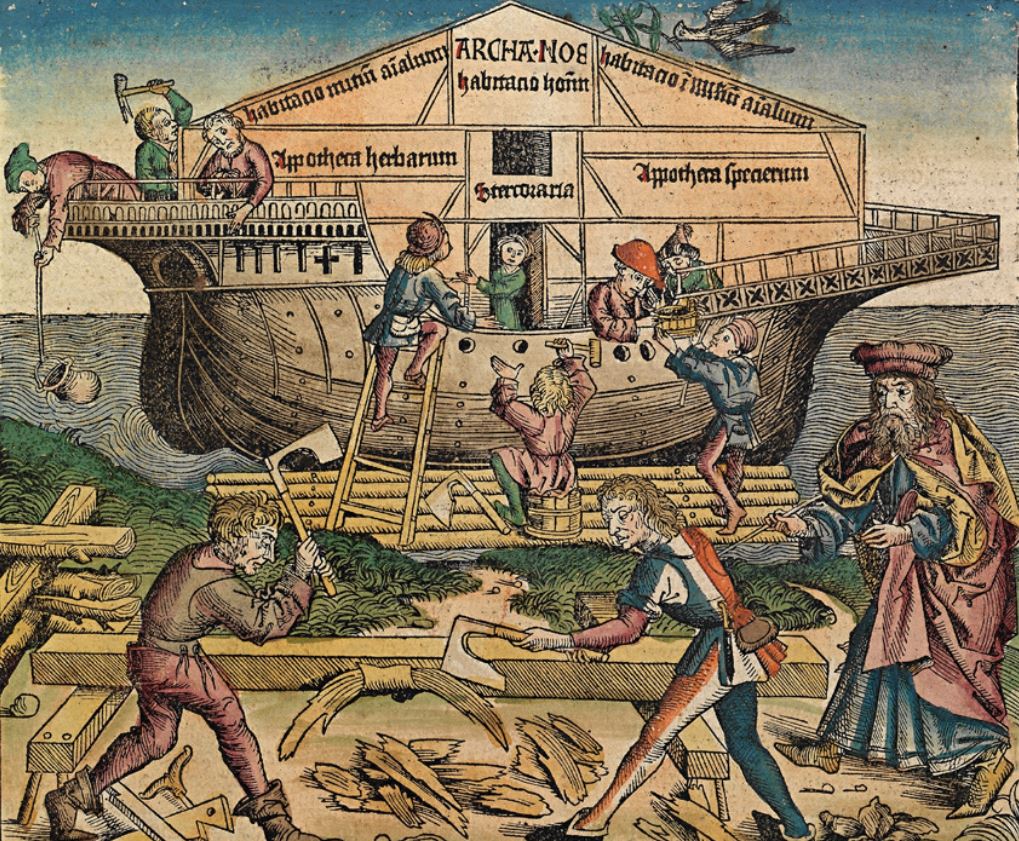
ark noahHis early friendship with Pius V wasn’t enough to prevent Bruno’s eventual  execution by the Church, accused of heresy for promoting the notion that Christ was different and separate from God, thus questioning the doctrinal definition of the Trinity. His main crime, however, was his incessant free-thinking independence. Even during his years at the monastery, Bruno committed a host of insubordinate transgressions – from reading the banned works of Erasmus (he kept a copy hidden beside the toilet) to removing images of saints from his monastic cell. At the monastery, Bruno wrote an allegory he called Ark of Noah in which donkeys, representing monks, brayed their displeasure at their seating assignment on the ark. It was meant to symbolize the pettiness and lack of serious aspirations among his brother friars. (Much later, at his inquisition, Bruno said the then current Pope Pius V had rather liked the tale.)  After eleven years as a monk in Naples, Bruno fled when warned charges of heresy were being drafted against him.

renaissance peasantBruno dressed as a peasant rather than a monk when he left Naples, travelled to Rome, then Genoa and Turin. He stayed in Venice long enough to publish a book on the innocuous subject of memory, written simply to earn a bit of money. But by age 30, he felt Italy was unsafe, so he moved north. Over the next 14 years, Bruno lived in Geneva, Paris, Prague, London, and Frankfurt.

He tried his hand as a playwright in Paris, creating The Candlemaker, a comic satire, which exposed prevailing superstitions. But mostly he wrote philosophical tracts and made studies on the nature of memory. King Henry III was a patron, especially appreciating Bruno’s lectures on tricks of memory. This led to Bruno’s 1582 book, The Art of Memory, a somewhat scholarly treatise. It was published in Paris with the king’s encouragement. Through court connections, Bruno lived in London for two years, staying at the home of the French ambassador. Renowned  as a  philosopher of nature, he was invited to lecture at Oxford, but his defense of Copernicus and his opposition to Aristotelian philosophy kept him from receiving the teaching post he anticipated. (2) But perhaps it was more than his vision of science – Bruno’s religious ruminations were unpalatable everywhere in Europe, even in relatively liberal England.

For Bruno, our planet was one of many worlds and doomed to eventually disappear.  In De Immenso, Bruno wrote: “The earth, which is of the same species as the moon, is of creatable and destructible substance, therefore the worlds are able to be created and destroyed, and it is not possible that they have been eternal, since they are alterable and consisting of changing parts.”(3)  Bruno thought that our planet had formed out of hot mass, then cooled and shrunk according to laws that act the same everywhere in the universe. According to Bruno, the mountains formed as the Earth’s surface cooled. This concept of a cooling, contracting Earth would return again and again among geologists over the next three centuries. It was an important insight into the understanding of the evolution of the world. Bruno turned out to be wrong – it’s plate tectonics, not a shrinking, cooling crust that makes mountains, but the idea represented good 16th century logic.

While in London, in 1584, Bruno published On the Infinite Universe. This was likely the first book to describe an endless universe, with innumerable worlds populated by intelligent beings. The stars are like our sun, around each revolved a planet like our own. Bruno, incorporating his philosophical description of existence into his concept of the universe, claimed all matter has intelligence – every part of the universe, every rock, drop of water, plant, and animal, has a soul or is part of an all-encompassing soul. By publishing this philosophy, he committed the heresy of pantheism.

Without the Oxford appointment in England, he returned to Paris, but it had swung against him and his liberal interpretation of religion, so Bruno travelled to Germany where he taught for two years. Then Prague. He was running out of places and people to trust. But during all his wandering, Bruno continued to writeTheses on Magic; Composition of Images and Ideas; A General Account of Bonding. These were largely concerned with thought processes and psychology – his book on bonding, for example, related to the interconnectedness (the bonds) of society. Then he returned to Italy, to die.
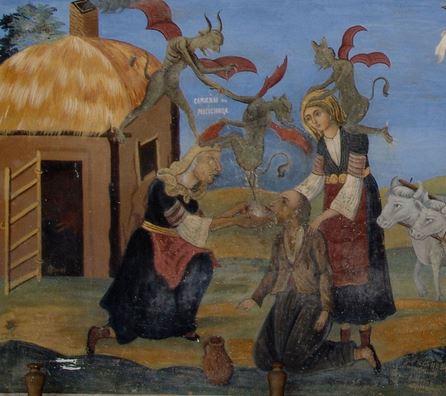
witchtortureThe execution of Bruno, on February 17, 1600, was but one example of hundreds of attempts by the church to coerce scientific and philosophical harmony with theological dogma. Historian Andrea Del Col estimates that between 50,000 and 75,000 cases were judged by the Inquisition in Italy alone, resulting in 1250 death sentences.(4) This was in addition to hundreds of thousands of accusations of witchcraft where children and women were the principal victims.(5) Undoubtedly,  many allegations arose from civil disputes and grudges, but the stifling atmosphere of rigid church-sanctioned scientific doctrine prevented much genuine unbiased inquiry into the nature of the universe. The martyrdom of Giordano Bruno, immolated at age 51, set an example which stifled free-thinking scientists and philosophers for generations. Galileo, forced to utter words of obedience to the church and recant his belief in the motion of the Earth and planets around the Sun, was fully aware of Bruno’s fate.  In fact, Robert Bellarmine – the chief inquisitor who had directed the torture of Bruno 16 years earlier – was now Cardinal Bellarmine and had become the pope’s intellectual adviser. The cardinal spoke with Galileo, offering leniency in exchange for obedience.

Giordano Bruno envisioned a universe far larger than the Aristotle model. Bruno suggested the sun was a mere star – and the universe contained an infinite number of stars and an infinite number of inhabited worlds populated by other intelligent beings. For this, and other unorthodox views, the Roman Inquisition found him guilty of heresy and ultimately murdered him in a disturbingly cruel way.  The death of the first martyr for modern science served its purpose. Free-thinking and inquiry were stifled. But unlike Bruno, they were not burned to ashes.

Notes:
Most of the preceding is an excerpt from The Mountain Mystery.
(1)  Mercati (1943). Il sommario del processo di Giordano Bruno, con appendice di documenti sull’eresia e l’inquisizione a Modena nel secolo XVI.
(2) In 1583, when Bruno lectured at Oxford, the school had on its statutes that “Bachelors and Masters who did not follow Aristotle faithfully were liable to a fine of five shillings for every point of divergence.” Bruno was not in any way a follower of Aristotle.
(3) Bruno, Giordano (1591). De Immenso Book IV, x, pp 56-57. Described by Paterson in the 1973 “Giordano Bruno’s View on the Earth without a Moon,” Pensee Vol. 3.
(4) Del Col, Andrea (2010). L’Inquisizione in Italia. Oscar Mondadori, Milan. pp 779-780.
(5)  Sagan, Carl and Ann Druyan (1997). Demon-Haunted World: Science as a Candle in the Dark, Ballantine Books.
 

Posted in Biography, Culture, Non-drift Theories, Philosophy, Religion, The Book | Tagged , , , , , , , | 6 Comments

Geology President’s Day

Americans get a day off today. It’s an occasion to remember the American presidents, especially Abraham Lincoln and George Washington, two of the February-birthday presidents. (The other two were William Harrison and Ronald Reagan.) On this day, Washington, Lincoln, and the other 41 people (mostly men) who were president of the USA are remembered by saluting flags and by sleeping in late.

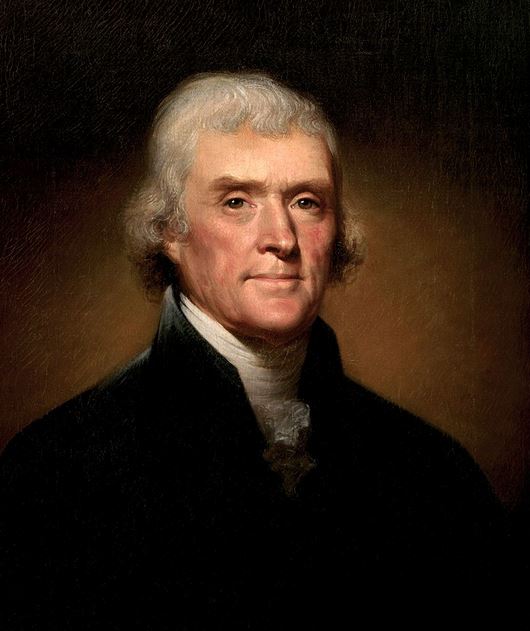
JeffersonMy favourite president was Thomas Jefferson. Not just because he was an agnostic and a beekeeper. But rather, because when he was being sworn in (as Adam’s vice president), Jefferson carried fossils in his pocket. Seems he knew an eminent geologist would be at the little get-together (the Inaugural Ball) planned for later that evening. (*) I don’t know what bone bits  were in his pocket, possibly they were pieces from a wooly mammoth.

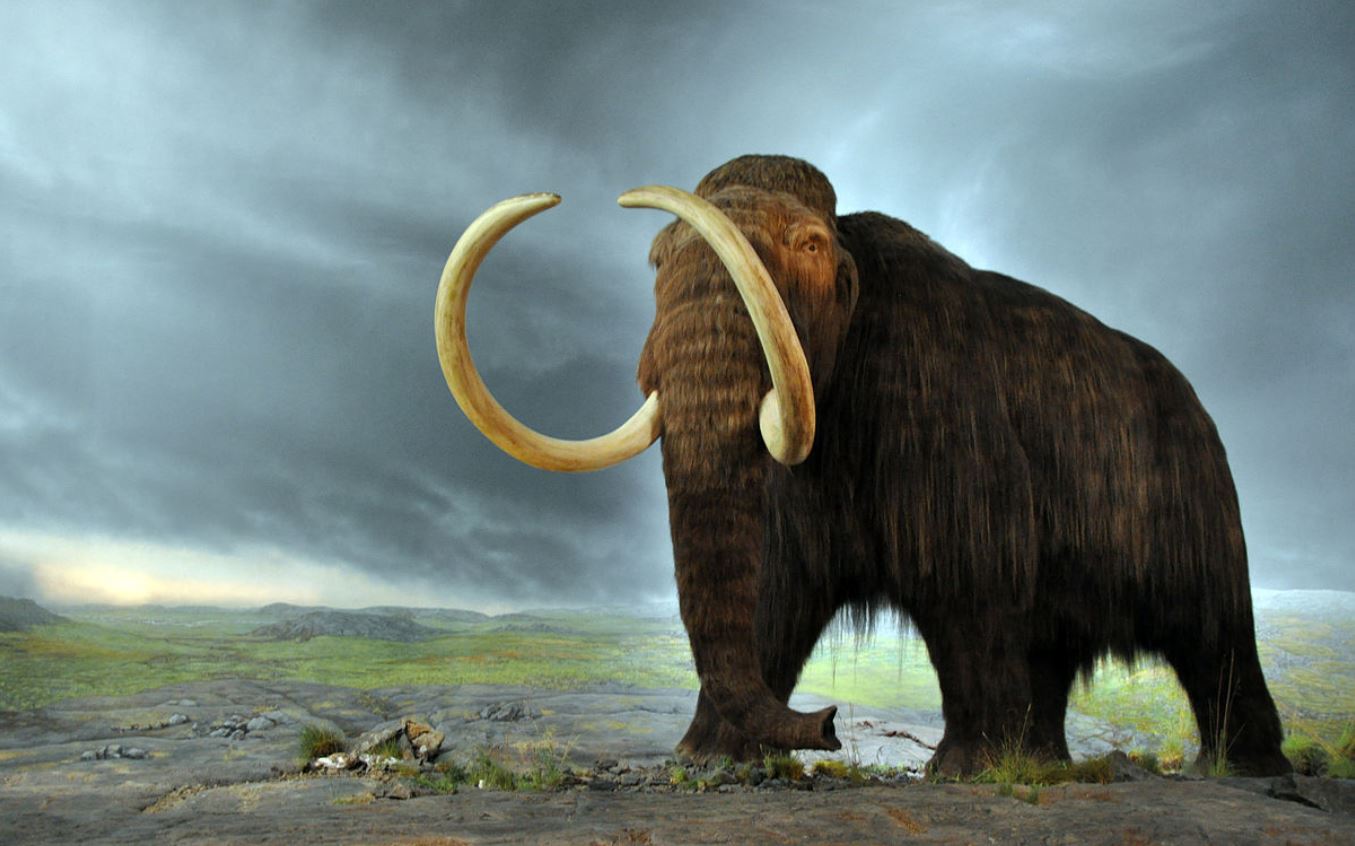
Wooly mammoths were special friends of Thomas Jefferson. Jefferson heard about gigantic elephant bones discovered in Kentucky. While president, he hired George Rogers Clark to go to Boone County to collect the largest of those bones for examination at the White House. Meanwhile, Jefferson sent Clark’s brother and Meriwether Lewis to explore the rest of the continent and catalogue all the animals found along the way. Looking for a living specimen of a giant elephant was not Jefferson’s main motivation in commissioning the Lewis and Clark Expedition, but Jefferson knew it would be grand to drag an elephant back east, and perhaps ship it off to Europe to showcase the mammoth animals of the Americas.

Wooly mammoth

Wooly mammoth. (Photo Credit)

Fossilized elephant bones – but no live samples – were sent east from Big Bone Lick, Kentucky. Jefferson and the other scientists who examined the huge bones quickly realized these differed somewhat from the remains of modern elephants. They were more like the mastodon fossils recently dis- covered in Siberia. Meanwhile, George Cuvier, in France, identified similar specimens in a private European fossil collection. Cuvier and the Americans recognized their respective animals as the same creature, now extinct. The theory of extinction led to speculation that dramatic changes had been occurring on a rather long-lived planet. Although the idea of extinction was contrary to contemporary interpretations of biblical scripture, in 1803, the president of the United States held the proof of mastodon extinction in his own hands.

Before leaving you to go off and celebrate this important American holiday, one more geology-thing to know about Thomas Jefferson. In 1807, the president established the country’s first scientific agency, the United States Coast Survey. A few decades later, it split into the United States Geological Survey and the National Geodetic Survey. These have grown and morphed into groups that keep an eye on the Earth. Among other things, they monitor earthquakes, operate streamflow gauges, measure the planet’s magnetic field, chart the country’s resources, provide location coordinates used in map making, and archive some of the best wooly mammoth fossils. Perhaps some of those fossils spent time in the president’s pocket.

Notes
(*)  Halpern, Joel Martin (1951). “Thomas Jefferson and the Geological Sciences,”  Rocks and Minerals, Nov-Dec 1951, p 601.

Posted in Biography, Culture, Geology, History | Tagged , , , , | 3 Comments

Charles Darwin, the Geologist

Ridiculing Darwin, Hornet magazine 1871

Darwin as imagined by Hornet magazine 1871

It’s his birthday. It seems Charles Darwin’s legacy is experiencing a renaissance. Sure, some 60% of Americans vilify the man and hope he is roasting in hell. Or undergoing reincarnation as a toad, or is still awaiting release from purgatory. I guess that the eternal damnable punishment for writing a pretty good book depends on one’s own vision of a just and loving supreme being. Darwin has somehow caught the heat and hate of a lot of people who have trouble with scientific inquiry – and where such inquiry may lead.

Nevertheless, few scientists were as meticulous, thoughtful, and cautious as Charles Darwin. Though we celebrate his ideas of natural selection, survival of the fittest, and the origin of species, the idea that biology continually sorts and rearranges itself evolved slowly in the years before Darwin. The notion of evolution became evident to other natural philosophers in the early 1800s. Before Darwin boarded the Beagle in 1831, he had already been exposed to the uniformitarian ideas of Lyell, Lamarckian evolution, and perhaps the works of Townsend, Wells, Matthew, and Adams – proponents of various schemes of natural selection, the effects of tooth and claw, and the malleability of species.

Although Origin of Species appeared 156 years ago, one could argue that the gospel of evolution is actually over 200 years old. Charles Darwin was the last of the first great apostles. He was expected to become a rural pastor, but like the man from Tarsus, he experienced unexpected insight and then wrote letters and books that became part of the greatest story ever told. But the analogy ends there. The theory of evolution is not a religion of inflexible dogma; it is an element of science – a  restless collection of ever-changing observations and thoughtful interpretations. It is fraught with errors and flaws. What we believe to be true about science may be an illusion. Scientists accept this. They relish it, actually. The greatest joy and biggest impact any scientist may achieve comes in disproving something that everyone else holds dear. New observations sometimes markedly transform the truths revealed by earlier generations of scientists. We’ve seen this in plate tectonics, germ theory,  subatomic physics, climate science, public health, and cosmology. We’ve seen corrections to theories again and again.

young Darwin

Portrait of 31-year-old Charles Darwin
by George Richmond in 1840

Amazingly, Charles Darwin’s theory of evolution as presented in his book  On the Origin of Species by Means of Natural Selection, or the Preservation of Favoured Races in the Struggle for Life (That’s the full title.) has changed little in 150 years. Subsequent discoveries have reinforced Darwin’s hypothesis. For example, Darwin wrote Origins almost 50 years before Mendel’s ideas of particulate inheritance were employed by de Vries and Correns. Mutations to alleles, caused by environmental damage from radiation and chemicals, was not imagined by anyone in Darwin’s day. Nor were genes and chromosomes, the helix of codes, DNA sequencing, recombination, RNA transfer, and instructions for protein production controlled by the order of just four chemical bases abbreviated as A, C, G, and T. Yet all of these new discoveries continually validate the basic theories that Darwin published in 1859. Any scientist who could prove Darwin’s take on evolution is fundamentally wrong will be hailed as the greatest scientist since Darwin. But so far, evidence just keeps piling up to support Darwin’s original idea.

Pretty good work for a Victorian-era geologist. Darwin was first noted as an accomplished rocks guy – biology came later. It might be more fair to describe him as a natural philosopher, as generalists were called in his day. He fell in love with geology on the third week of his 5-year voyage aboard the Beagle. Here is what he said about the Cape Verde islands when he first saw them:

The geology of St. Iago is very striking yet simple: a stream of lava formerly flowed over the bed of the sea, formed of triturated recent shells and corals, which it baked into a hard white rock. Since then the whole island has been upheaved. But the  line of white rock revealed to me a new and important fact, namely that there had been afterwards subsidence round the craters, which had since been in action, and had poured forth lava. It then first dawned on me that I might write a book on the geology of the countries visited, and this made me thrill with delight.
– Darwin’s Autobiography, p. 81.

Darwin's drawing of a Pacific atoll, 1842

Darwin’s drawing of a Pacific atoll, 1842

Darwin wrote that geology book, and several others. His major study on the Structure and Distribution of Coral Reefs (1842) upset existing coral theory. Darwin believed that since coral can’t grow in deep water, reefs must grow on slowly subsiding rocks. Coral continues to grow as the mountain supporting it sinks, leaving a fringing barrier reef and eventually an atoll. As a result, he said, the coral limestone could become miles thick, building on itself at the pace that the supporting mountain subsides. For over a century, there was debate about his theory. Darwin’s ideas was verified in 1951 when US geologists, checking out islands for atomic hydrogen bomb tests, drilled two holes in the Enewetak Atoll test site in the Pacific. They drilled through a kilometre of old coral and then reached a mountain of volcanic rock. The kilometre of old coral had originated in shallow water, demonstrating the subsidence of the volcanic mountain and continual growth of coral upon coral –  proving Darwin was right.

Closer to his home in England, Darwin became a proponent of the unpopular idea that the Earth is very, very old. His study of the geology of the Weald Mountains resulted in his estimate that the range was at least 300 million years old. At the time, Lord Kelvin used the physics of thermodynamics to insist the Earth could not be more than 20 million years in age. Darwin was adamant – he had measured the rate of erosion of the Weald highlands and it would take 300 million years to reduce them to their present height. For this, and his many other geological studies, Darwin was awarded the Geological Society of London’s Wollaston Medal, Britain’s highest recognition for a geologist.

There is much more to say about Darwin and geology. For that, I have a lagniappe for you. Here is a Darwin’s Day gift, of sorts. What follows is pilfered directly from my book, The Mountain Mystery. It is a tale that recounts Charles Darwin’s gentlemanly skirmish with America’s greatest geologist of the time, James Dana. And it includes interesting correspondence written by Darwin which you have probably never seen before. And it traces the first stages of the reluctant acceptance of Darwin’s theory in America.

James Dana, at age 71

James Dana, at age 71

Here we go:  James Dana was head of geology at Yale for 42 years. He married his Yale chemistry professor’s daughter, Henrietta Silliman. Dana was a respected gentleman who played piano at church, led Bible studies, and prayed over meals with his family. In his early 40s, he wrote Science and the Bible which attempted to reconcile geology with religion. But he kept his religious sentiments peripheral to his science. Unlike most of the earlier geologists, he didn’t try to distort his geological discoveries to match his spiritual beliefs. Dana worked in the opposite direction – he found biblical passages that confirmed what science was telling him. He fully accepted the Bible as God’s revelation, “But there are also revelations below the surface, open to those who will earnestly look for them.” (1)

There was one exception to Dana’s practice of finding biblical scriptures to justify scientific discoveries. He refused to reconcile evolution with his faith, even though he maintained a cordial correspondence with Charles Darwin. And Darwin with Dana. However, it seems neither one found it necessary to read the other’s books before criticizing them. You can see how this unfolded with the following exchange of letters in 1863. First, we find Dana writing to Darwin:

“The arrival of your photograph has given me great pleasure, and I thank you warmly for it. I value it all the more that it was made by your son. He must be a proficient in the photographic art, for I have never seen a finer black tint on such a picture.

“I hope that ere this you have the copy of Geology (and without any charge of expense, as this was my intention). I have still to report your book [The Origin of Species] unread; for my head has all it can now do in my college duties. I have thought that I ought to state to you the ground for my assertion that geology has not afforded facts that sustain the view that the system of life has evolved through a method of development from species to species. . .” (2)

In his letter, Dana then proceeds to list some basic errors in Darwin’s logic. Dana finds there are “missing links” between many species (though he readily adds that he knows that not all the world’s fossils have been discovered). Some species, according to Dana’s understanding of Darwin, developed from “higher  groups of species instead of  the lower,” implying a reverse evolution that would suggest Darwin’s basic theory was wrong. And some species seemed to go extinct in the rock record, but then somehow “started again as new species.” All of these criticisms from America’s greatest geologist were valid at the time. They were all subsequently resolved when the fossil record became more complete.

Darwin wrote back to his colleague:

“I received a few days ago your book and your kind letter. I am heartily sorry that your head is not yet strong, and whatever you do, do not again overwork yourself. Your book [Manual of Geology] is a monument of labour, though I have as yet only just turned over the pages.” (3)

It is interesting that two of the greatest geologists of the century couldn’t find time to read each other’s most important works. Darwin goes on:

“With respect to the change of species, I fully admit your objections are perfectly valid. I have noticed them. . .  Nevertheless I grow yearly more convinced of the general (with much incidental error) truth of my views. . . As my book has been lately somewhat attended to, perhaps it would have been better if, when you condemned all such views [regarding evolution], you had stated that you had not been able yet to read it.” (4)

Prehistoric Man, from Dana's Manual of Geology

Prehistoric Man, from Dana’s Manual of Geology

Darwin’s irritation with his friend at last surfaced. Dana had been publicly attacking Darwin for months without actually reading On the Origin of Species. It would take years, but incredibly, the book which sat unopened on Dana’s shelf was eventually read, appreciated, and accepted as fact by North America’s foremost geologist. In Dana’s 1896 edition of Manual of Geology, Dana completed his long treatise on geology with an unequivocal acceptance of Charles Darwin’s science – with one notable exception. In his final textbook, James Dana virtually gushed with admiration for the theory of natural selection and he admited that in the thirty years between his first rejection and his whole-hearted acceptance, science had found the missing fossils that had caused him concern. He listed the evidence: progress from aquatic to terrestrial life; progress from simple to more specialized; modern embryos, with “part of the early life of the globe” (5) represented in their development; “unity in the system of life” regarding how creatures are organically related (all are carbon-based life-forms); and, the increasing levels of cephalization, or brain complexity, as a function of time.

Dana summarized, “According to the principle of natural selection, an animal or plant that varies in a manner profitable to itself will have, thereby, a better chance of surviving, and of contributing its qualities and progressive tendency to the race, while others, not so favoured, or varying disadvantageously, disappear.” Dana conceded that the origin of the variations was unknown, but expected science to discover this, too. His book was published in 1896, the same year as the discovery of radiation, a key environmental cause now known to contribute to genetic variation.  In his final book, Dana backed up his support for Darwin’s discoveries with dozens of specific examples. Years ahead of evolutionary biologists, Dana even correctly speculated that dinosaurs had evolved into birds. But James Dana never accepted that humans had evolved from earlier creatures.

Dana concluded his magnificent Manual of Geology with a lengthy discussion of Man’s pinnacle position in the biological order of life on Earth. “Man’s origin has thus far no sufficient explanation from science. His close relations in structure to the Man-Apes are unquestionable. They have the same number of bones with two exceptions, and the bones are the same kind and structure. The muscles are mostly the same. Both carry their young in their arms.” (6) And yet, James Dana, the piano-player at the church where he was a leader, cautioned against carrying the similarities too far, inviting the reader to crawl around on all fours like a great ape and see that humans don’t have the massive neck muscles required to keep the head level. He ended with “. . .the intervention of a Power above Nature was at the basis of Man’s development. Nature exists through the will and ever-lasting power of the Divine Being, and all its great truths, its beauties, its harmonies, are manifestations of His wisdom and power.” (7)

Over a lifetime of research, teaching, and writing, Dana had published two million words in his scientific books and papers. His influence was phenomenal not just in the role evolution plays – or does not play – in man’s ascent, but also in his approach to science. He was able to reverse his earlier instincts and accept most of the idea of evolution when the mass of evidence was finally clear. And, in his own mind at least, he was able to reconcile two dichotomous forms of revelation – stones from the Earth and messages from God.

In the end, James Dana was very nearly a Darwinian evolutionist. He stopped short of fully endorsing all aspects of evolution, namely man’s ascent from earlier forms, but his scientific mind could not reject the fundamental elements of life’s evolving nature. Charles Darwin’s patience and polite reception of his erstwhile adversary had everything to do with James Dana’s awakening and the subsequent arrival of evolutionary theory in America.

Notes:
(1)  Dana, James Dwight (1856). Science and the Bible, p 81. Warren F. Draper, Andover.
(2)  Dana, James Dwight (1863). Dana’s letter to Darwin, from New Haven, Connecticut, February 5, 1863.
(3) Darwin, Charles (1862). Darwin’s letter to Dana, from Bromley, Kent, February 20, 1863
(4) Ibid.
(5) Dana, James Dwight (1896). Manual of Geology, pp 1028-1035.
(6) Ibid.
(7) Ibid.

Posted in Biography, Culture, History, Philosophy, Religion, The Book | Tagged , , , , , , , | 7 Comments

World’s Biggest Fracking Quake?

“Did Alberta Just Break a Fracking Earthquake World Record?” This is the headline in The Tyee, an online independent magazine focused on western Canada, and it seems the paper thinks so. The Tyee’s coverage of a big fracking earthquake in northern Alberta is mostly accurate, although a larger quake was reported in Oklahoma in September 2014. The Canadian shake measured 4.4 while the Sooner State’s quake was 4.5. An even larger one is alleged and implicated in an injury lawsuit in Oklahoma. I’ll have more about that in a moment.

Readers of this blog are aware of fracking. Hydraulic fracturing forces reluctant oil and gas out of the ground. The technology was invented half a century ago (1947, actually) but grew out of much earlier fracturing schemes, dating back to at least 1865 when nitroglycerin torpedoes were dropped into shallow Pennsylvania wells to “loosen up” the rocks, encouraging oil to flow. Recently a refined system of hydraulic fracturing became widespread.  The big leap in modern fracking is that it is not limited to enhancing existing conventional wells. Instead, it is used to extract petroleum from previously worthless shale. This is a really big deal.

Marcellus Shale - Photo credit: PD by Lvklook

Previously worthless Marcellus Shale:   Photo credit to Lvklook

Shale is black sedimentary rock that forms in slowly moving or stationary water, in lakes, lagoons, river deltas, sedimentary basins or the deep quiet water sometimes edging continents. Fine particles – mostly muddy clay with specks of quartz – remain suspended in water long after sand and gravel have deposited. Eventually they also sink, compact, and solidify. This makes shale. Bits of organic material are often mixed in with the mud. Those bits of former life then decay, generating oil and natural gas. In the past, oil rigs drilled through the shale, scorning it as an expensive delay; hydrocarbons were too solidly locked within the impermeable shale. All that changed around 2008 when oil patch tricks enabled ways of fracturing the shale and releasing its oil and gas. At the right price and with the right technology, the USA may recover 5 trillion barrels of shale oil. That’s enough to outlast the human species.

Instead of drilling through the shale, a well’s bit is directed to snake inside the shale layer. Pressurized water (along with caustic chemicals) are shot through the pipes and blasted into the previously impermeable shale, fracturing it and connecting all the morsels of hydrocarbon so they can be pumped to the surface. Heat, pressure, caustic chemicals, morsels of hydrocarbons – what’s not to like?

Some day, the United States may again be independent of imported fuel. If petroleum production from shale (and conventional and offshore sources) continues as it has in the past, America will eventually be liberated of its dependency on the whims of tin-pot dictators and the various caliphs feeding the American oil habit. It would be better if the country would simply use less of the stuff, but since that doesn’t look likely, home-grown fuel is the next best option. This has huge global political implications. As Thomas Friedman of the New York Times evinced,  human rights are at stake.

Thomas Friedman’s First Law of Petropolitics limned that as the price of oil increases, so does repression in Russia, Iran, Venezuela, and Saudi Arabia. It was, in part, the lofty price of oil that encouraged Putin’s invasion of the Ukraine. It is oil wealth that funds the religious fervor and terror that is ISIS. Oleaginous money in non-democratic states placates powerless citizens while their leaders strut about in military exercises and bolster domestic secret police, tyranny, oppression, and ethnic and religious extremism. On the other hand, weaker oil prices weakens the oppressors. Friedman points out that rogue nations may attempt brutal misbehaviour without oil wealth, but the pressure on them to reform is greater when they are confronted by soft oil prices. As the price of oil goes down, the pace of freedom goes up,says Friedman.  Brutality is linked to the price of oil. When an energy hog like the USA imports monstrous quantities of petroleum, the price of oil goes up.

Increased energy production in North American has a positive impact on liberty, freedom, and democratic stability around the world, simply by lowering the price of oil. Meanwhile, domestic production leads to domestic jobs. American and Canadian oil workers buy local tofu (produced from North American soy beans) and send their daughters to piano lessons taught by retired school teachers in their home towns. The money stays home – those petrodollars line the pockets of neither oligarch nor theocrat.  Human rights and domestic prosperity. What’s not to like?

The downside is environmental, of course. Even Alberta’s conservative premier, Jim Prentice, readily acknowledges that production of oil and gas – things that make western Canada wealthy – contributes to global warming. Here, verbatim, is part of a February 1, 2015, nationally televised interview between CBC’s lead anchor, Peter Mansbridge, and Alberta’s Jim Prentice, head of the Conservative Party:

“You believe that climate change is caused, in some part, by human use of fossil fuels?” asked the TV newsman.
“Correct, anthropogenic carbon,” said the Alberta premier.
“You don’t challenge that?” The news anchor pushed.
“I don’t challenge that. I never have,” said Premier Prentice.

The leader of Alberta agrees that consumption of Albertan, Texan, Saudi, and Russian oil contributes to global warming. Canadian Prime Minister Stephen Harper, another conservative, has demurringly concurred on various occasions. Global warming, pollution, earthquakes. We have already seen that oil riches correlate disturbingly to terrorism in undemocratic regimes.  Yet, we need oil. Perhaps it’s the unbridled use of the stuff that’s causing the trouble. As George W Bush famously professed, the problem is oil addiction.

rolling coal

Mind if I smoke?

Rather than shutting down North American production while continuing to consume oil at an increasing level, efforts should be directed at reducing consumption and encouraging alternative sources of energy. Legislation can help diminish the environmental impact of production and consumption. The goal is not to reverse progress or impoverish people but instead to enforce clean operating practices at oil projects – as well as at the tail pipes of pickup trucks. As much as I hate to admit it, that requires government involvement.

Tragedy of the Commons

Tragedy of the Commons: The Community Pasture (Source: UN Food and Agriculture Organisation)

When it comes to the community pasture, people and business seldom do the right thing without prompting. Invariably, sheep gnaw the grass to the ground. Although it might seem anti-business to strictly prescribe ethical practices, progressive companies welcome such regulation. In a non-corrupt regime, laws are equally enforced. Corporations with a conscience (and there are many) appreciate a level playing field: it requires their competitors to clean up spills, messes, and exhaust in the same way that a good corporate citizen would.

Nixon, pointing out the advantages of an Evironmental Protection Agency.

Nixon, pointing out the advantages of an Environmental Protection Agency.

Unfortunately, appropriate regulation is trailing the booming fracking business. During the Bush administration, public sentiment encouraged removing the teeth from environmental protection policies. (Surprisingly, it was Republican President Richard Nixon who established an environmental protection agency to clean up the air and water. The EPA did an amazing job. Smog disappeared over L.A. Chemical sewers such as the Monongahela could be fished and swam again, just as in pioneer days.)  Today, however, the EPA and its sister agencies are weak. Public protection fell to the private-sector, using the mechanism of lawsuits.  In other words, companies may make a mess, but if someone is injured or bothered, legal claims are filed. There was some merit to this policy – until recent legislation put ceilings on settlements. With limits to payouts for injuries and punitive damages, the fangs were removed from this new, alternative system of self-regulation. A slap on the wrists does not reform a serial polluter, whether that slap comes from a fine when a law was violated or from proscriptively reduced court settlements.

As a result, the whole field of environmental safeguards in hydraulic fracturing is badly fractured. Government regulations are often weak or nonexistent. Inspectors are sometimes powerless. Legal actions are beginning to be filed against companies alleged to cause injury or damage. You can read one such statement of claim, the first I’ve seen, filed August 3, 2014, in District Court in Oklahoma. Here is some of that claim, and it does not appear captious nor does is seem splenetic:

On or about November 5, 2011, Ms Ladra was at home watching television in her living room with her family. Suddenly, her home began to shake causing rock facing on the fireplace and chimney to fall down and into the living room. Some of the falling rocks struck Ms. Ladra in her lap and onto her legs, and caused her significant injury. She was rushed to an emergency room and was immediately treated for her injuries…

…injection wells have caused and contributed to numerous earthquakes occurring in Oklahoma, and have specifically caused the damages sustained by Ms. Ladra…

The 5.0, 5.7. and 5.0 Prague [Oklahoma] earthquakes destroyed many homes, damaged many buildings, and injured many people. These earthquakes buckled pavement on the streets and highways…

Ms Ladra is seeking at least $75,000 in compensation plus punitive damages. The suit is brief, just 7 pages, and is worth reading. It succinctly outlines the allegations against the resource companies involved and their injection wells. It cites that the US Geological Survey has issued a statistical analysis showing the recent increase in Oklahoma’s earthquakes is not the result of natural seismic changes, but rather is most likely caused by wastewater injection wells. The lawsuit states that the USGS has warned that the rise in seismic activity “has significantly raised the chance of a damaging magnitude 5.5 earthquake or greater in the state [Oklahoma].”  The statement of claim also points out that  “So far this year, Oklahoma has had more than twice the number of earthquakes as California, making it the most seismically active state in the continental United States.”

The lawsuit brought by Ms Ladra in Lincoln County District Court was dismissed by the local judge. He cited lack of jurisdiction. What he probably meant was that the jurisdiction is much bigger than a single county in east central Oklahoma. The state’s Supreme Court is taking the case instead. This obviously points to the significance of the issue for the entire state, and indeed, the country.

Readers of this blog may recall the piece I assembled last year about the increase in seismic activity in Oklahoma. It recounted the USGS warnings that the rumbles were unusual, were man-made, and would continue. The chart below says more than anything I could write about the increase in Oklahoma earthquakes. The numbers began to jump in 2009, just as fracking in the state began to expand. Until then, only one or two earthquakes over 3.0 Magnitude occurred in the state. This chart’s stats end in May 2014, but the earthquakes continued and the year ended with over 400.

Oklahoma quake graphI am not one to put undue reliance on correlations. But both the Oklahoma and US Geological Surveys have been pinpointing the sources of these earthquakes – most are shallow and can be traced by triangulation to injection wells. Cracked concrete in basements, pictures knocked from walls, and fireplaces landing atop ladies are not necessarily the activities of man-made earthquakes, however few natural earthquakes misbehave like this in Oklahoma. The earthquakes in question could conceivably be due to God’s malevolence and not man’s ignorance, but most likely they are fracking disasters. It will be left to the judicious wisdom of a jury to determine whether specific companies should be held accountable.

Meanwhile, in a state with 3,200 active injection wells that smashed over a billion barrels of water into subsurface fractures, the Oklahoma Corporation Commission directed that one such injection well be shut down Tuesday, due to continuing earthquakes. This is only the second of the 3,200 Oklahoma wells to be stopped, but it does indicate awakening concern for quakes caused by these injectors.

Here in Alberta – a place where the world’s largest fracking earthquake did not occur – oil companies and government agencies are expanding networks of seismic monitors so they can precisely locate the sources of the increased earthquake activity. Others are working on a mechanical remedy, some system or technique that will allow fracking to continue without damage to homes and home dwellers. While they are at it, they might as well find ways to mitigate the damage done when these small earthquakes rupture subsurface seals and allow caustic injection fluids to leak into fresh-water aquifers.

As I tried to show earlier, North America needs to produce its own fuel, not import the stuff from corrupt undemocratic regimes a hemisphere away. Fracking will continue, but rather than accept insouciance and parsimonious behaviour from the developers, fracking will need to continue with greater oversight. The real battle for this will be courtrooms in the USA. It may be true that Alberta almost tied Oklahoma in producing the largest fracking earthquake, but my instinct tells me that the hardy Americans will continue to hold the trophy for the noisiest cracking of rock and shaking of soil.

Posted in Engineering, Geology | Tagged , , , , , , , , , , , , , , , , | 3 Comments

The Geoscientists’ Blind Spot

The Grumpy Geophysicist‘s blog has an insightful piece today. He relates the slow acceptance of continental drift (later morphed into plate tectonics) to an inherent nature in the way humans look at new ideas. It’s a good read…

cjonescu's avatarThe Grumpy Geophysicist

One advantage of looking back at the history of earth science is to recognize patterns that suggest certain biases.

Consider, for instance, continental drift.  Now this is often portrayed as Wegener right, others stupid dunderheads, but obviously that is too simple. First off, Wegener had a mix of good and bad observations.  Aside from fitting continents (a somewhat old parlor game by then), he noted common terrestrial species, ice deposits far from the pole, and the fundamental division between continental crust and oceanic crust.  But he also put a lot of weight on his own grossly inaccurate geodetic surveys and so concluded that Pleistocene deposits on either side of the Atlantic predated the separation of the continents.  But the big objection to continental drift was simply: how would it occur?

Here’s the funny thing: this is common to any number of ideas based off of observation in earth science.  If…

View original post 854 more words

Posted in Geology, How Geophysics Works, Plate Tectonics, Reblogs | Tagged , , | Leave a comment

Tibetan Mountain Mystery

Tibet Plateau

Tibet Plateau – getting wider by 0.015 metres every year!   (Photo: Land-of-snows)

Tibet’s mysterious plateau – part of the largest and thickest bit of earth crust anywhere on the planet – was recently subjected to the scrutiny of a group of Kansas University scientists. They flew into Lhasa, capital of Tibet, then took a 12-day jeep trek to the spot they felt might give up the plateau’s secret. How was the mammoth block of continental crust built and why is it spreading out, east-to-west?

The KU geologists collected more than 60 samples along a rift valley cutting the Tibetan plateau. Mostly they sampled granite, the rock that forms much of the core of this mountain range, the largest range in the world. Granite is an igneous rock, forming when magma slowly cools and crystallizes inside the crust. Granite commonly contains zircon, a mineral that allows reasonably easy and accurate age-dating. Zircon crystals often contain uranium, which decays into lead. The ratio of U/Pb reveals the age of the crystal, which yields the age of the granite and the hosting mountains.

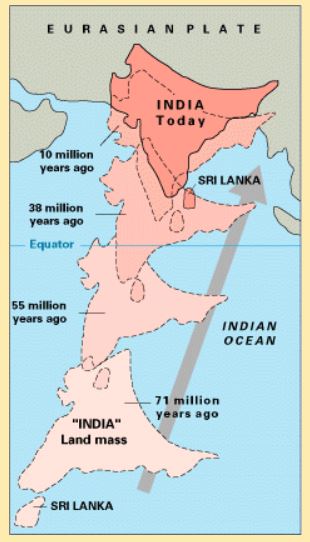
India moving

    India’s journey to Asia.              (Source: PD, US Gov’t)

The team found that the zircon formed 15 million years ago, coinciding with the time the Tibetan plateau began its east-west stretching. Pressure from the south squeezes the plateau and forms a modern rift valley which grows northward at a rate of 15 millimetres a year – the same speed that India pushes under the Himalayas, just to the south. How do we know the rate these blocks move? Over 2,000 GPS tags are anchored into crust around the world – scientists track the moving continents as if the crustal plates were a fleet of ocean freighters hauling stone and gravel.

The Indian subcontinent is a chunk of mobile continental crust that can be traced across the Indian Ocean to its launching point near east Africa. It is the mother of the world’s greatest mountains. Plate tectonics, of course, built the Himalayan range and indirectly causes the odd widening of the Tibetan plateau. Because plate tectonics was established over 50 years ago, it might seem mote to reconfirm India’s role in south Asia, but for a long time this seemingly obvious geological task was not so broadly accepted.

India seemed to be a geological outlier in the plate tectonics story. For decades, some well-positioned geologists absolutely refused to believe India had floated in from the southwest. Howard Meyerhoff, once editor of the highly prestigious Science, is a notable example. Years after its general acceptance, Howard and his son Arthur Meyerhoff doubted plate tectonics in general and spent years diligently producing points of discrepancy within the theory. They were apparently more than devil’s advocates, they seem sincerely convinced that plate tectonics was a theory that would eventually fail.

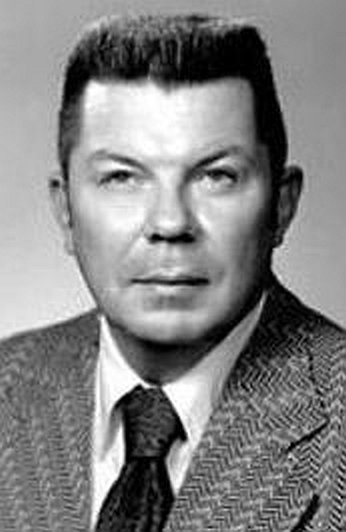
Arthur Meyerhoff (1928-1994)

Arthur Meyerhoff (1928-1994)

The younger Meyerhoff, Arthur, produced a substitute hypotheses. His 1988 book, Surge Tectonics, proposed a creative alternative earth-model: an interconnected near-surface world-wide plumbing system that conveys melted igneous rocks. This plumbing system, he suggested, was being misinterpreted as plate tectonics. I’ll write more about Meyerhoff’s curious idea of surge tectonics in a future post as it is an intriguing theory that has seen a recent rebirth, albeit in a transfigured form. At the moment, I’d like to further consider why India was once seen as an unlikely candidate as the force that built Tibet and the Himalayas.

The Meyerhoffs were convinced that India had always been part of Asia. They disagreed with the tectonics model that the subcontinent had drifted into place from somewhere near Madagascar and elevated the Himalayas into existence by striking Asia. Part of their argument was geological, part was based on paleobiogeography and fossils. Even today, there are a few who claim that there is “overwhelming geological and paleontological evidence that India has been an integral part of Asia since Precambrian time. If the long journey of India had actually happened, it would have been an isolated island-continent for millions of years – sufficient time to have evolved a highly distinct endemic fauna. However, the Mesozoic and Tertiary faunas show no such endemism, but indicate instead that India lay very close to Asia throughout this period, and not to Australia and Antarctica.” (1) As recently as 2012, geologist N. Christian Smoot, who had written papers with the late Arthur Meyerhoff, published Tectonic Globaloney. His book contains the line, “India has been in place for several billion years rather than wandering around.” (2)

The Meyerhoffs asserted their opposition was based on “geological fact, which nothing can change.” (3) But new information can change “geological fact” as we have seen repeatedly. Almost invariably, a scientist who claims to hold facts that “nothing can change”, is proven wrong. The facts are always changing, always open to investigation and confirmation. Today, geologists believe India was transported atop a north-bound convection current. For them, this best theory fits the geological facts – as understood at the moment.

The number of geoscientists who disagree with the tectonic mobility of the Indian subcontinent is likely fewer than a couple hundred. Meanwhile, 10,000 other geoscientists see ample evidence – reinforced monthly by researchers such as the team from Kansas. At present, each new discovery – each linear fault and fracture, each shard of fossil, and each bit of subatomic decay in zircon crystals – bolsters the basic plate tectonics model developed by Harry Hess, Maria Tharp, Tuzo Wilson, Lawrence Morley, Jason Morgan, Xavier LePichon, and dozens more during the 1960s. The mountain mysteries are still best explained by mobile continents. Fifty years of evidence has reinforced, not demolished, the theory. And, of course, there are those GPS records that have been inexorably documenting the wanderings of all the continents – including India.

Notes:
(1) Pratt, David (2011). “Sunken continents vs continental drift.
(2) Smoot, N.C. (2012). Tectonic Globaloney: Closing Argument, p 157. Published by AuthorHouse, UK.
(3) Meyerhoff, Arthur, Howard A. Meyerhoff (1972). “The new global tectonics: Major inconsistencies” American Association Petroleum Geologists Bulletin, Vol 56, p 297.

Posted in History, How Geophysics Works, Non-drift Theories | Tagged , , , , , , , , | 1 Comment

Riding the Moho


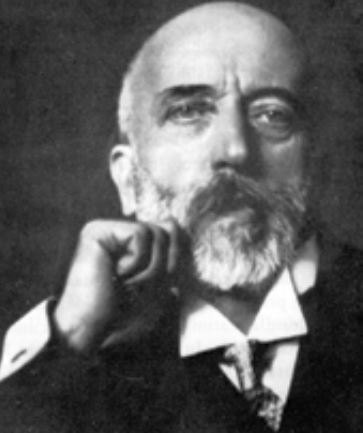
Mohorovicic

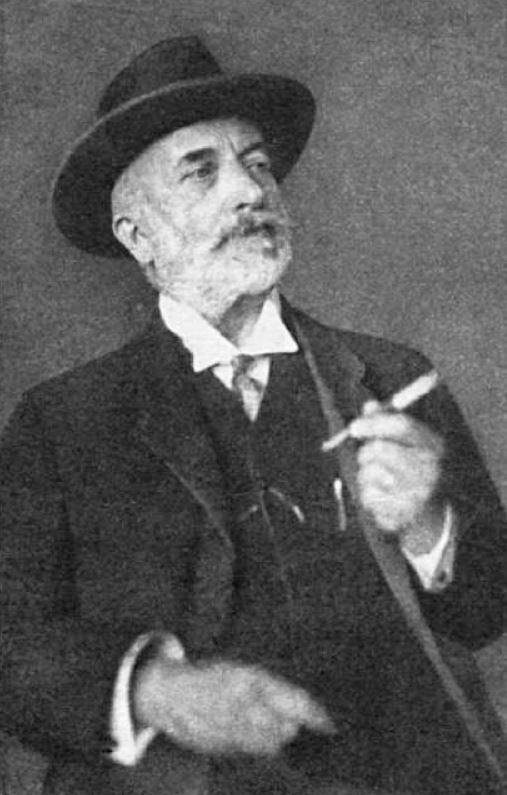
                    Andrija Mohorovičić                           January 23, 1857 – December 18, 1936    

Today is the anniversary of the birth (January 23, 1857) of a brilliant geophysicist with an unpronounceable name (unless you are Croatian) – Andrija Mohorovičić. (You may say On-Dree-Ya Mow-Hoe-Row-Vitch-Itch. Or, like many a grad student, you could simply call him Moho.) Mohorovičić made an amazing deduction about the transition zone marking our planet’s mantle-crust boundary.  To com- memorate his life and his discovery, I am republishing part of the man’s story from my book, The Mountain Mystery. If you have even a meager curiosity about how the Earth works, you will likely find this tale interesting . . .

The fact that continents are moving is not in doubt – GPS measurements have proven it. But, in order to slide our big clunky continents, it helps to have a slippery base at the underside of the crust. The abrupt discontinuous slippery zone was discovered by the geophysicist Andrija Mohorovičić. He was born in the Croatian village of Volosko, near the Adriatic Sea. The place is noted as Mohorovičić’s birthplace (a metal plaque tacked on an old building says as much), but today the town is usually crowded with windsurfers, drawn by the area’s incessant breezes. Mohorovičić said it was those constant winds that encouraged his study of meteorology, his primary interest. He was awarded scholarships abroad, far from the village where his father worked as a blacksmith making ship anchors. At 15, Mohorovičić was studying climate, experimenting in physics, and he could read Croatian, Italian, English, and French. He added German, Latin, and Greek in university. Not bad for the village blacksmith’s son.

Mohorovičić studied physics in Prague in the 1870s. His school was outstanding. Instructors included Hornstein, a sunspot and magnetism theorist who taught astronomy and analytic mechanics; Lippich, a theoretical physicist who taught the physics of energy (and was replaced by Albert Einstein on retirement); and Mach who concentrated on diffraction, refraction, and propagation of sound waves – the essentials of seismology. Ernst Mach also explored the shock waves produced when a projectile exceeds Mach 1.

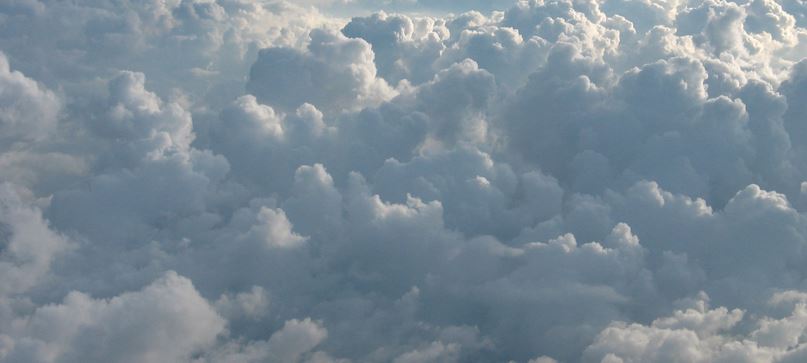
cloudsIn 1893, Mohorovičić earned his doctorate at age 35, studying cloud formations. He tracked them using a nephoscope he perfected – a device that followed clouds and determined their heights and speeds. Before submitting his thesis, he was already head of a meteorological observatory and he had created the national weather service for his entire country. His work at the weather observatory began to include geomagnetism and seismology.

His switch from meteorology to geophysics was somewhat abrupt and risky for the respected scientist in his early forties, particularly within the hierarchical system of the old Austro-Hungarian Empire. His meteorology papers were well received and diverse – Mohorovičić even recorded “atmospheric gravity waves” caused by the 1908 Siberian meteor which had destroyed a huge swath of forest 5,000 kilometres away, along the Tunguska River. But Mohorovičić abandoned meteorology because climate study “should have at disposal about a thousand years of observations, not a hundred” before there was enough data to allow meaningful conclusions. He figured climate studies should be deferred “to our far descendants” who might then have the necessary information to understand it. (1)

He also voiced frustration with the fact that his meticulously derived short-term weather forecasts were only 77 percent accurate, though that sounds rather good to me! So Mohorovičić completely abandoned meteorology and focused on seismology. His shift to geophysics reflected the changing focus of earth science around the world. His own institute, Zagreb’s Meteorological Observatory, was renamed the Institute of Meteorology and Geodynamics, then rebranded again as the Geophysical Institute in the years after Mohorovičić, indicating the growing importance of geophysics. Not long after Mohorovičić made his career change, an earthquake struck near his home in Zagreb. That event, at the age of 53, led to the most important discovery of his life.

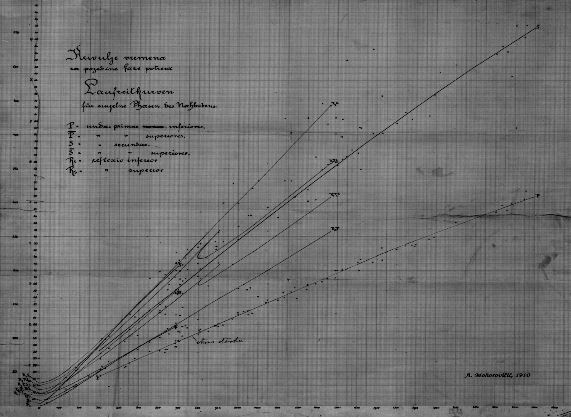
The 1909 Pokuplje Event toppled chimneys and a few stone buildings. It was a relatively benign earthquake. There were no recorded fatalities. However, it supplied a wealth of data from newly installed seismographs across central Europe. Mohorovičić asked colleagues from Munich, Strasbourg, Rijeka, Vienna, Sarajevo, and 24 other stations to send their records to him. He was able to derive startling conclusions from the obscure squiggles on those seismic sheets. Mohorovičić compared arrival times of the shock waves at the various stations and plotted what he labelled krivulje vremena, or time curves, for the earthquake’s phases. (2)  Interestingly, though his landmark graph has fewer than 30 words on it, titles and notes appear in three languages – Croatian, German, and Latin. Mohorovičić learned physics in German, was trained in the Classics, but was most comfortable in his first language. It was a time of transition in classical education – within a few years, Latin would no longer be inscribed on final drafts of scientific papers.

Seismic waves from the Moho – graphs labelled in Latin, German, and Croatian

Seismic waves from the Moho – graphs labelled in Latin, German, and Croatian

As he analyzed the earthquake data, he became seriously confused. It should have been a simple step to triangulate the location of the epicentre, but Mohorovičić failed again and again. He gave up the notion that, with depth, the velocity of seismic waves travelling inside the Earth increase linearly. After plotting the Pokuplje earthquake data from those 29 different sets of seismograms, Mohorovičić noticed that the pressure waves (P-waves) required two separate curves on his time-travel graphs. Plotting time in seconds on the Y-axis and distance in kilometres on the X-axis for each station’s records, his travel-time curves “revealed two individual primary waves at different velocities,” he wrote. (3)

It was a bold step, a leap into scientific uncertainty, when he decided to ignore conventional wisdom and assume that the earthquake shock waves had entered a strange realm, about 50 kilometres below the surface, where they abruptly travelled much faster than expected. He worked out his thoughts with geometric drawings based on the raw data. Through that, he discovered the physics function scientists now call the Mohorovičić Law.

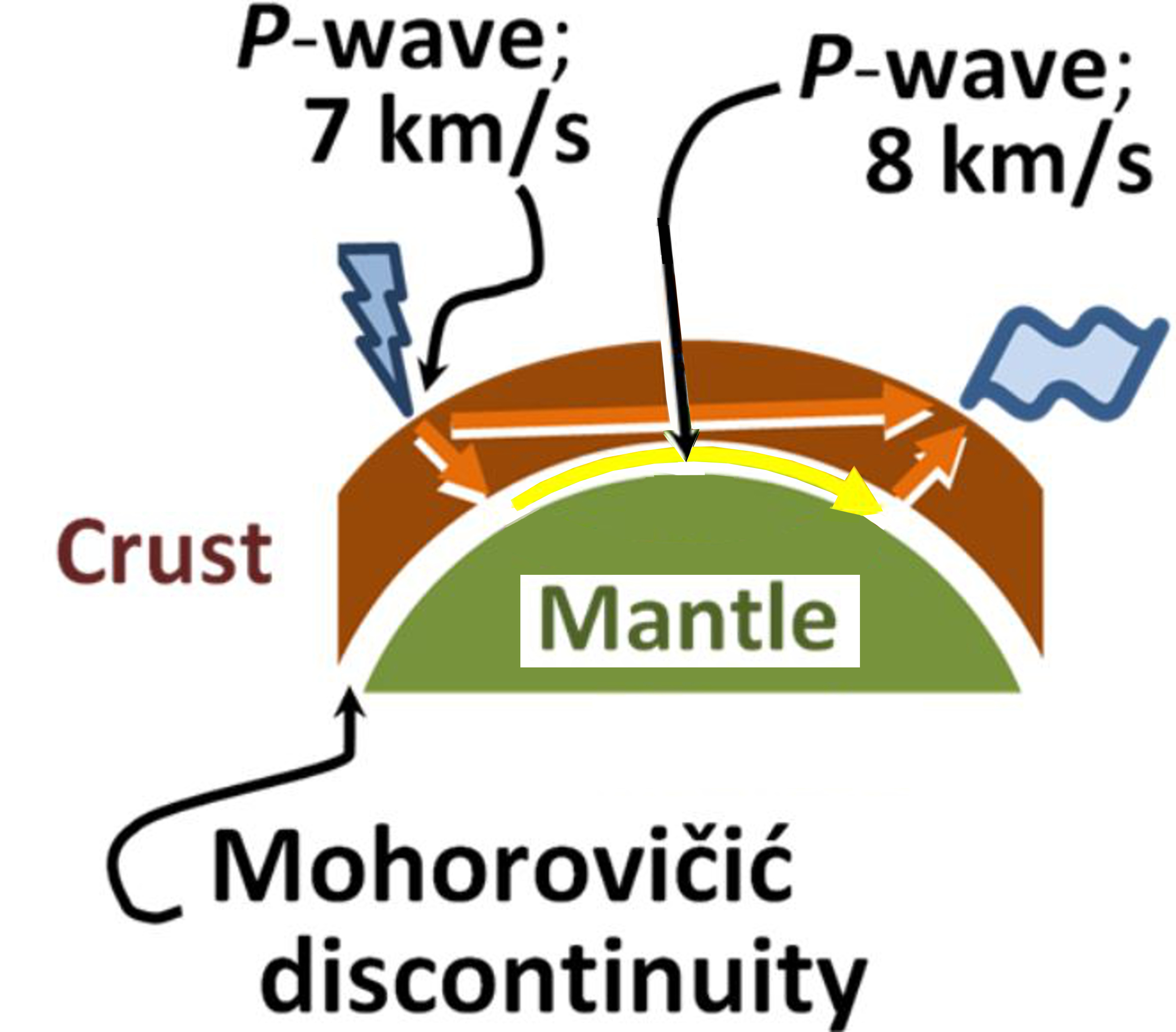
He noticed that the same sort of seismic shock wave was travelling at two different speeds through the Earth. It was as if the voice of a friend, calling from some distance away, reached you at two different times. This might be possible if in addition to travelling through the air, the sound of your friend’s words also vibrated along an adjacent stone wall and approached your ears by that faster route as well. Mohorovičić realized the seismic P-waves he was observing had found two different routes to the seismometers – a slow shallow route and a fast deep route. The energy from the earthquake’s epicentre had split up, some of the energy waves finding a faster path along an interface between layers deep within the Earth. Mohorovičić worked out the refraction equations, the ray-paths of the P-waves, and their reflection points as the sounds knocked around inside the Earth’s crust, and he concluded there had to be an abrupt change in the material that comprises the Earth’s interior.

Photograph of Mohorovičić at age 70, in 1926

Photograph of Mohorovičić at age 70, in 1926

From his seismic records, Mohorovičić was able to show that the inner Earth has distinct layers, and the crust has a definite thickness, ending at the slippery boundary zone which today is called the Moho Discontinuity, or the Moho. A change of composition at the mantle and crust boundary creates the seismic velocity change that puzzled him. Mohorovičić estimated that the crustal layer of the continent in his part of Europe was roughly 54 kilometres thick. He wrote, “I decided on a rounded-down depth of 50 kilometres, since this was the approximate depth of the P-waves, thus the lower boundary of the topmost layer of Earth’s crust is located at this depth. At this boundary, the material of which the Earth’s deeper interior consists must change abruptly, because the velocity of the earthquake waves’ propagation  changes abruptly.” (4)

Mohorovičić was inferring details about a dark inaccessible place. No one will ever visit the boundary between crust and asthenosphere, but Mohorovičić described it.  Using his techniques, later refinements and more data show us that ocean crust is comparatively thin – just 5 to 9 kilometres – but continental crust is exactly as Mohorovičić had determined, about 50 kilometres thick. Very significantly, Mohorovičić showed that the planet has a discontinuity, which serves as a detachment, forming a slippery zone, allowing continents to slide.

Think about his discovery. It was made from a couple dozen plots of the amount of time it takes an earthquake’s waves to reach a seismic recorder. From that, Mohorovičić surmised the nature of the Earth 50 kilometres below the surface. Of his amazing feat of calculation, Mohorovičić’s biographer Dragutin Skoko wrote, “. . . in the Earth’s interior, seismic waves travel invisibly and inaudibly. They can be followed only by mathematical equations.” (5)   Mathematical equations and very clever thought.

Notes:
(1)  Mohorovičić, Andrija (1897). “Klima grada Zagreba,” Rad JAZU, Vol 131, pp 72-111
(2)  Mohorovičić, Andrija (1909). Laboratory notebooks.
(3)  Mohorovičić, Andrija (1910). “The Earthquake of October 8, 1909,” Godisnje Izvjesce Zagrebackog Meteoroloskog Opsevervatorija, Zagreb.
(4)  Mohorovičić, Andrija (1909). Yearbook of the Meteorological Observatory, Zagreb.
(5)  Skoko, Dragutin (1982). Mohorovičić, Školska Knjia, Zagreb, Croatia, p 7.

Posted in Biography, Geology, History, How Geophysics Works, Plate Tectonics, The Book | Tagged , , , , , , , , , , | 2 Comments

Ben Franklin: Geophysicist

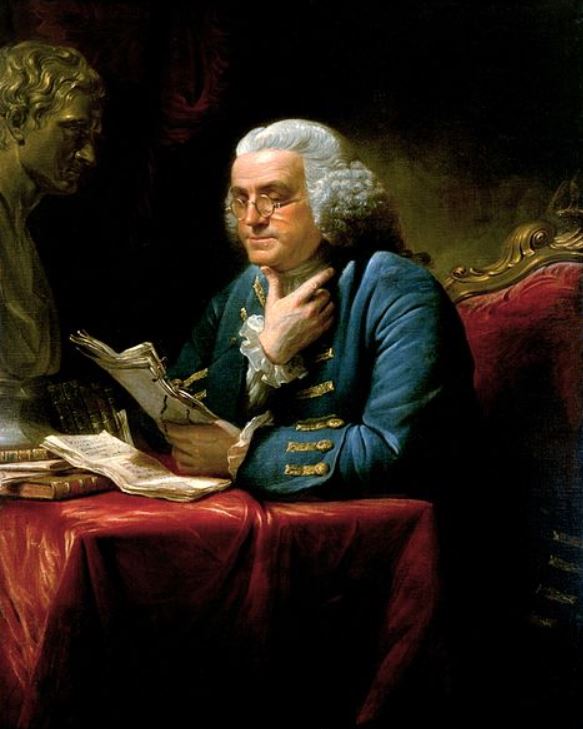
Franklin, painted in 1757 by D Martin.

Franklin, painted in 1757 by D Martin.

It’s a stretch to claim Benjamin Franklin as a fellow geophysicist. But I think we have more claim to him than the optometrists who consider Franklin a fellow glasses-maker. (Franklin invented bifocals.) Franklin, whose birthday is today, studied lightning and ocean currents and had ideas about plate tectonics. Earth physics. He also had a few things to say about science and religion – we’ll get to that in a moment.

Most of the readers of this blog (about 60% of you) live in the USA. So you know this great American hero of The Revolution. For the rest of the readers, I’ll recap just a few of the many highlights of Franklin’s life.

tallow chandler

New England tallow maker, 1730.

Ben Franklin was born on this day (January 17) in 1706. His father was a rather ineffective merchant of soaps and candles and Ben was the youngest son in the family of 17 children – the family had little money, so Ben had a very short formal education. About two years, actually. At age 10, he was pulled from school to help his father make soaps and tallow candles. As a teenager, Ben Franklin apprenticed as a newspaper printer for his older brother. His brother wouldn’t let him write for the paper, so Ben discreetly submitted tidbits of gossip and news under the pseudonym Mrs Silence Dogood. James Franklin was outraged when he discovered he’d been duped into printing his little brother’s gossip. So at age 17, Ben Franklin became a fugitive – he broke the law by running away from his apprenticeship. He left Boston and went to Philadelphia.

Ben Franklin opened his own publishing shop in Philadelphia, perhaps a risky move for a fugitive. He published Poor Richard’s Almanac which became a wellspring of wholesome adages. These included didactic witticisms like “Time is money“, and “Success has ruined many a man.” The sort of profundities that modern philosophers such as Deepak Chopra and Eckhart Tolle now make millions publishing.  Banalities paid well in those days, too. With the cash, Franklin cobbled together a chain of newspapers that extended from Charleston, South Carolina, up to the New England states. Franklin made most of his money as a publisher and author.

The uneducated fugitive founded the American Philosophical Society (1743) and the first hospital in America (1751). Multi-talented Franklin is the first American chess player known by name – he wrote an essay, The Morals of Chess, in which he expounded upon attributes a good chess player employs: Foresight, Circumspection, and Caution. The man also loved music: he played the violin and harp, and wrote a notable string quartet. (Follow this link to hear it performed with a full orchestra and with the glass harmonica he invented.)

Ben Franklin always had a revolutionary spirit and his writings were filled with liberal sentiments of American independence and republicanism. He was imprisoned (briefly) for publicly airing his thoughts about England’s king and the king’s intentions for America. Eventually Franklin helped write the Declaration of Independence. When Thomas Jefferson sent Ben Franklin a copy to be edited, Franklin changed an important line. “We hold these truths to be sacred and undeniable…”  became instead an assertion of rationality: “We hold these truths to be self-evident…” The use of the word sacred, said Franklin, inserted a sense of religiosity that he wanted kept out of government documents. Benjamin Franklin was a deist – a person who accepts that a god of some sort likely exists, but who rejects prayer and numinous texts and sees no role for divinity in the affairs of humans or natural events. And like many deists of his day, Franklin also had a strong scientific curiosity.

Franklin's science experiment chases cheribs away.

Franklin’s science experiment chases cherubs away.

Franklin famously flew a kite to investigate lightning – it was an electrifying experience. With proof that lightning is electricity, he invented lightning rods – iron spires that can attract bolts of lightning and transfer their power safely to the ground. This invention prevented house and barn fires and saved thousands of lives.

In a totally different scientific endeavour, Franklin figured out and named the Gulf Stream – he had mariners take temperature and flow measurements in the Atlantic, then he put together all the data into the first map of the warming current, in 1768.

It is not surprising that Benjamin Franklin also had clever geological insights. He observed that the horrific Icelandic volcano Laki, which erupted in 1783 while he was living in Europe, had caused the dreadful winter weather felt on the continent in 1784. Franklin noted the season began with heavy smoke and fog, which he speculated were caused by volcanic ash. Franklin was the first scientist to grasp the volcano-weather relationship.

On the Theory of the Earth, a 1782 message to French geologist Abbé Giraud-Soulavie, Franklin described the way islands and continents might move about on the Earth’s surface. In his letter, he construes how an island he observed might have obtained its twisted, convoluted layers of rock:

“Some part of it having been depressed under the sea, and other parts, which had been under it, raised up. Such changes in the surface parts of the globe seem to me unlikely to happen if the Earth were solid to the centre. I therefore imagine that the internal parts might be a fluid more dense than any of the solids we are acquainted with, which therefore might swim in and upon that fluid. Thus the surface of the Earth would be a shell, capable of being broken and disordered by the violent movements of the fluid on which it rested.”

Benjamin Franklin described an Earth with thick, dense fluid inside which causes the surface crust to be violently broken and mobile – no one else would come closer to describing the modern theory of plate tectonics for almost two hundred years. But his comment, a mere speculation, was not noticed by geologists. And if it had been, they had no way to test its validity. However, this letter further panegyrizes the brilliance of the man with a brain that seemed to think about everything. So we celebrate Ben Franklin today, on the 309th anniversary of his birth. And perhaps imbue ourselves with this pithy poem:

“If you would not be forgotten
As soon as you are dead and rotten,
Either write things worth reading,
Or do things worth the writing.”    – Ben Franklin, 1738

Posted in Biography, Culture, History, Plate Tectonics | Tagged , , , , | Leave a comment

Tonga Shakes. Again.

Tonga. The most active seismic area in the world.

Tonga. The most active seismic area in the world. (photo credit – Stefan Heinrich)

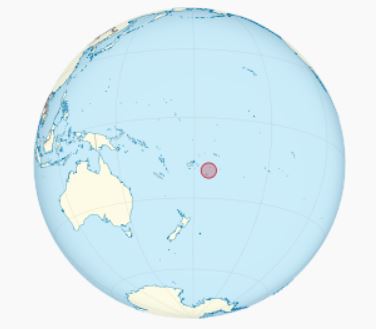
Tonga. It’s an archipelago for the seismic history books. Tonga is in the news again, this time the submarine volcano Hunga Tonga-Hunga Ha’apai was spotted by NASA satellites because the eruptions discoloured the Pacific waters amidst the island kingdom’s 176 islands. Locally, the area with the latest volcanics is known as “the place where islands jump back and forth”. The Tongans gave the region that name a long time ago. The jumping is seismic and that’s related to the volcanoes. The volcanoes are related to a deep subduction zone, a place where ocean crust is devoured in the Earth’s mantle.

Tonga - rather remote

Tonga – rather remote

Tongans are proud that they have never been colonized – they’ve never been anybody’s property. Considering the record of western domination, this is indeed something to take pride in – although part of the reason Tonga was never conquered may be that the thinly populated islands offered little more than subsistence farming and volcanic ash. There really wasn’t much reason for the French, Dutch, British, Portuguese, Spanish, or Americans to conquer and hold these dots of land. Nor would there have been much interest in a handful of islands that constantly shake.

Tonga and nearby Fiji are isolated but seismic geophysicists have been finding their way there since the 1950s. The area is a living laboratory of earthshattering activity. It was in this part of the Pacific that American scientists first got a clear glimpse of a subduction zone in action. Until then, the idea that the Earth consumes oceanic crust was an unproven scientific conjecture. But then Bryan Isacks and Jack Oliver showed up on the islands with their seismometers.

Serious worldwide seismic monitoring began with funding from the American defence department. In 1954, Jack Oliver, a young post-doc in New York City, accidentally monitored Nevada nuclear detonations on his east coast seismographs. It was immediately realized that such graphs could be used to keep an eye on Soviet nuclear tests. So the American government paid for installation of seismic recorders all over the world. Scientists jumped on the idea – perhaps they were saving the world from nuclear annihilation, but more importantly, they were gathering data about the Earth’s interior.

One use for all the new seismic data was mapping the Earth’s deep crust. In 1957, during the International Geophysical Year, the king of Fiji asked geophysicists to set up seismometers and to listen to the rumblings under his restless island. Recently, employing modern GPS equipment, scientists have learned that the spot Oliver and Isacks selected for their 1960s seismic study has the fastest plate movement on the planet – a rate of 24 centimetres per year, ten times faster than the global average of less than 3 centimetres. Movement of ocean crust at the Tonga Trench makes it the planet’s most energetic zone of seismicity. As Jack Oliver noted, in order to make an important discovery in science, be at the right place at the right time. He certainly picked the right place for seismic action.

For some great scientific breakthroughs, a measure of luck is involved. As Oliver writes in his book, Shocks and Rocks, plate tectonics was proven because “serendipity prevailed.” Serendipity, discovery by accident. Repeatedly, scientists have made accidental discoveries, often by gleaning data originally gathered for military use. Jack Oliver pointed out that the worldwide grid of seismic stations was not built for him to find slabs of ocean crust descending into the Tonga Trench, but scientists used the data for that purpose.

To investigate the deep-seated earthquakes revealed by military data, Bryan Isacks spent 15 months on various tropical islands, tinkering with seismometers and recording seismic stirrings within the deep crust and mantle. With his strategically located gadgets, Isacks found himself eavesdropping on the death groans of a gigantic slab of ocean crust sinking far below the geological structures that had created Tonga. The seismic noise was originating at least 600 kilometres below the Pacific’s calm surface. Scientists know that earthquakes result from violent shattering of brittle slabs of rock. Material six hundred kilometres below surface should be very hot and soft and pliable – bendable, not breakable, and not able to generate earthquakes. Enormous heat and pressure make such rock malleable. Nevertheless, they recorded deep earthquakes. The researchers concluded that a thick slab of cold ocean crust was being thrust deeply into the planet’s interior. But this was not a simple and direct conclusion. The idea contravened accepted wisdom – everything in the mantle should flow like cold molasses, not break like glass.

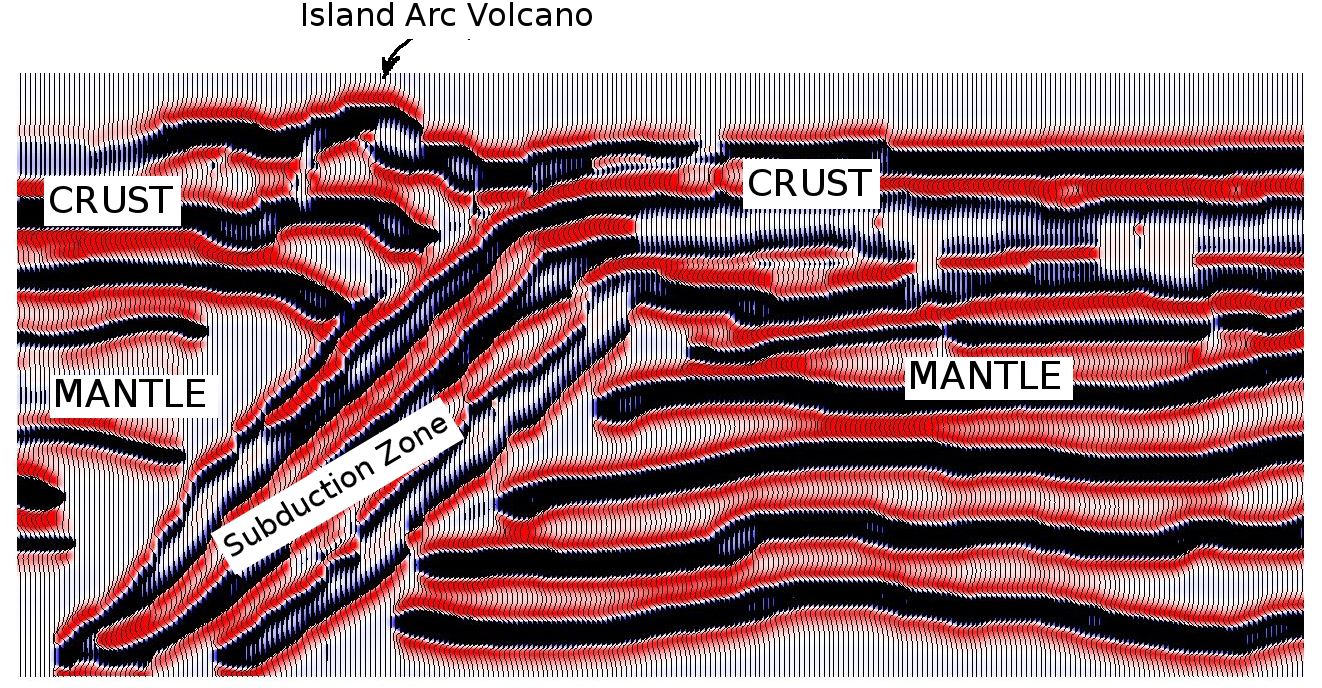
Seismic of an oceanic subduction zone - image modelled by Ron Miksha

Seismic of an oceanic subduction zone – image modelled by Miksha

Although several geophysicists had speculated about subduction zones, it was not until Isacks, Oliver, and Lynn Sykes published “Seismology and the New Global Tectonics” in the Journal of Geophysical Research, that subduction zones were proven. Their paper was the first to document how the Earth recycles crust in ocean trenches. For such an important paper, it is an easy read and a good review of the development of plate tectonics up to late summer, 1968.

Their article acknowledges Alfred Wegener’s continental drift, Harry Hess’s seafloor spreading, and Tuzo Wilson’s transform faults. After that preamble is a nod to mid-oceanic ridges, the nursery of the Earth’s crust. They show that the spreading seafloor is revealed by seismicity, earthquake swarms, and the “young ages measured by radioactive and palaeontological dating and the general absence of sediment.” Thus the authors acknowledged the birthplace of the planet’s rocky crust. Logically, if the crust is spreading from mid-ocean rifts, and not surviving to an extremely old age, it follows there must be places where the (comparatively) youthful rock is being destroyed. Their seismic proof of the crust descending into deep trenches was the fundamental contribution of their paper. Their seismic observation of the digestion of ocean crust was as convincingly clear as an X-ray image of a python swallowing a gerbil.

The scientists concluded that island arcs are zones of destruction, rather like downward escalators carrying ocean crust into a deep dark recycling depot. As proof, Isacks had captured those seismic earthquake signals – noises not dulled by soft, pliable rock but instead the crisp sounds of rigid surface crust cracking within the abyssal trench. The low-frequency seismic rumblings recorded in the south Pacific were the cacophonous crushing of ocean crust within the Earth’s mantle. This discovery was one of the final proofs of the plate tectonics system.

Until the work of  Isacks, Oliver, and Sykes in the South Pacific, the theory of tectonics was floating on thin crustal plates. Underlying dungeons were not much considered. Oliver himself said, “As far as I know, no one before us had thought in terms of such a large-scale thrusting phenomenon that moved a 100-kilometer-thick slab of lithosphere from near the surface to depths of at least 720 kilometers, or had even brought the lithosphere-asthenosphere structure into the picture.”

Oliver's "well-known sketch of a subduction plate."

Oliver’s “well-known picture” of a subduction plate

Oliver summed up the moment when he and Bryan Isacks first realized they had proof that trenches were swallowing ocean crust. “In retrospect, the final interpretation of the data seems obvious, but we pondered the data for months,” said Oliver. Then, one day, the team compared their records from Fiji to data from the Caribbean and “almost immediately, the well-known picture of the down-going slab beneath island arcs appeared on the blackboard.”

The current bit of Tongan volcanism and seismic shaking has wiped out wildlife on part of the island nearest the eruption, but the volcano has added a few hundred square metres of land to the kingdom. That new land, an upwelling of volcanic rock, is a by- product of the subduction zone gobbling up an incredibly huge swath of ocean seafloor. The bit of lava at Hunga Tonga-Hunga Ha’apai is but a small gift, an enlargement of the Tongan archipelago, given in exchange for seafloor crust – and given with much smoke and shaking to the little nation.

Posted in Geology, History, How Geophysics Works, Oceans, Plate Tectonics | Tagged , , , , , , , | Leave a comment

Ethical De-extinction

Mammoth

Buttercup, as she may have appeared 40,000 years ago. (Credit: WolfmanSF)

A South Korean biotech firm pulled blood from a frozen female Siberian wooly mammoth. Found on an arctic island in the East Siberian Sea, the creature is the best preserved mammoth ever discovered. When she was dug out of the thawing permafrost in May 2013, blood oozed from her body. Palaeobiologists performed an autopsy. They concluded that she was a 50-year-old who had mothered at least 5 calves. (They deduced that from growth rings in her tusk.) Buttercup the Mammoth, named after the flowers discovered fermenting in her stomach, apparently died when she became stuck in a peat bog and then was killed and partially eaten by predators. This could be one reason she was found with only three legs.

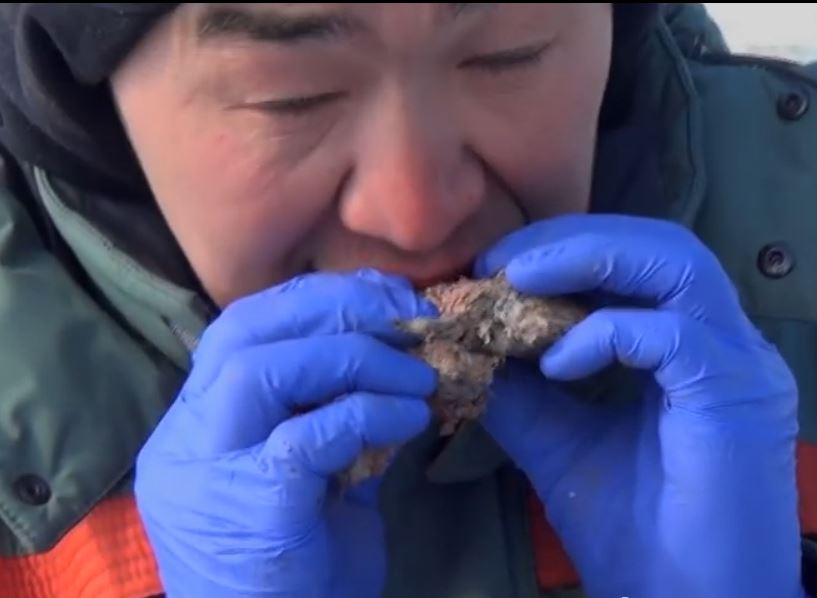
The mammoth had been frozen a long time. When she was discovered, the first scientists on the scene wondered how fresh the preserved body was, so one of the gentlemen took a bite of the mammoth meat, following up on the work other carnivores had begun just 40,000 years earlier. You might question the safety of eating a 40,000 year old steak, but locals had long fed similar finds to their hunting dogs. And, as they say,”if it’s good enough for a hunting dog, it’s good enough for a scientist.”

Eating mammoth meat.

Scientist eating mammoth meat.  (Credit)

From an experimental perspective, I guess it’s OK to have a bite. As Tori Herridge of London’s Natural History Museum explained, “it was just a wee nibble” and allowed the scientist to determine how well preserved Buttercup might be.  “I’m a paleontologist, I work on fossils normally . . . so to have the opportunity to get up close and very, very interactive with flesh that was quite bloody and sort of gory…” her voice trailed off. I don’t know if Dr Herridge tasted the meat herself, but she did have the chance to pet the dead mammoth’s hairy trunk. You can see more by watching this Russell Howard interview with Dr Herridge:

With all the blood and fleshy bits, it should be possible for the South Korean firm Sooam Biotech Research Foundation to clone Buttercup the Mammoth. Sooam Biotech has plenty of experience – they have cloned over 400 pet dogs. They will resurrect your favourite pooch for $100,000. For that price they also add a proof of purchase token – the cloned animal will be built with glow-in-the-dark toenails. Not only will you have a copy of your pet but it is less likely to get hit by a truck next time it crosses the street in the dark.

Sooam Biotech may be the perfect company for cloning a Buttercup. They have the experience. Apparently they also have the thick skin it may take to ward off ethical criticism arising from the venture. The firm’s founder is the daring and talented Woo-suk Hwang. The former veterinarian cloned the world’s first dog, Snuppy, in 2005. But you may also remember Hwang as being publicly disgraced for falsifying human embryo cloning research at Seoul National University, which expelled him. Even after the scandal, Hwang’s supporters raised nearly 4 million dollars and started Sooam Biotech in order to pursue commercial cloning. Hwang works there today, in a low-profile role. Woo-suk Hwang is apparently not directly involved in the company’s high-profile Buttercup project.

The question remains: should the cloning of a mammoth proceed? I doubt anyone will stop the project, so it’s likely a mote query. Nevertheless, there are ethical questions. At first these will involve the welfare of the elephants forced to act as surrogate mothers while the future mammoth is grown in the breeder’s womb. I suspect a few Indian elephants will unintentionally die in this pursuit. Then there are the offspring. Scientists believe that mammoths were gregarious band members. New creatures may be pretty lonely, unless the procedure is safe and inexpensive enough to allow a herd of clones. All of whom, presumably, will be female, if the only cloning stock is Buttercup.

Dodo, painted by F W Frohawk, 1905

Dodo, painted by FW Frohawk, 1905

Aside from the ethical questions regarding these science experi- ments on sentient elephants and mammoths, how does the successful cloning of a giant extinct mammal affect our perspective on the glaring reality of everyday extinction – much of it due to our own actions and manipulation of the environment? Shall we feel less guilty about the demise of the dodo bird, passenger pigeon, and polar bear? Knowing we can resurrect creatures we have killed, will we allow ourselves to become callous? (That is, even more callous than we already are?)

Whether or not we can make spare clones, we will continue to butcher our fellow creatures at an accelerating rate. We will lose the Earth’s genome diversity, one species at a time. Cloning – ugly as it is for the animals involved – is perhaps a debt we owe to those creatures succumbing to our bad habits. We are living in a new age – the Anthropocene, or Age of Man – and it is named for human-inflicted extinctions. Geologists define epochs on the basis of extinctions in the fossil record. Presently, more species are becoming extinct today (several dozen species disappear each day) than died off at any other time in the past 60 million years. We won’t reverse the Anthropocene, but like a desperate ex-lover, we may pull a few scorched letters from the fire we started. These letters may be simply C,G,A, and T, but they might remind us of the way things once were.

Besides the suffering endured by the resurrected animals and their surrogate mothers, a second ethical question arises with respect to the clone’s impact on the environment. In the case of the mammoth, that should be negligible as the environment of 10,000 years ago (when the last mammoth became extinct) is not much different today than it was in the day of Buttercup and her calves. Nearly identical flora, fauna, and even temperatures can be found among some of the world’s preserves. In this sense, at least, the mammoth will feel at home.

Woolemia nobilis, photo by

Woolemia nobilis  (photo by CT Johansson)

In a way, the ethics of de-extinction has already been answered. We have already resurrected an extinct species – and we have spread it around the world. Wollemia nobilis is a magnificent tree that flourished 80 million years ago, then slowly abandoned the fossil record everywhere in the world. Paleobotanists lost all trace of it in rocks younger than 2 million years, thus believing Wollemia nobilis became extinct 2 million years ago. But in 1994, a few living specimens were discovered in three small isolated ravines 150 kilometres northwest of Sydney, Australia. Since 2006, copies of the dramatic coniferous tree have been transplanted around the world. Botanical gardens are fond of Wollemia. It can tolerate a wide range of temperatures and soils – a grove of the Australian tree has been planted as far north as Scotland. If the Wollemia Pine had become extinct and was revived, would that be considered more ethically dubious than spreading this living fossil from its tiny reserve of isolated trees? If nature had run her course, a funeral for the last of the Wollemias would have been held later this century, a private ceremony attended by frogs and wallabies in that distant gorge. Instead, we can study this lone species, the sole representative of its genus. It is in many ways a unique tree.

Considered a Lazarus taxon, all known specimens of the Wollemia Pine are genetically identical, indicating the near extinction of the tree. It grows to 40 metres, has a fascinating brown knobbly bark, and resembles a monkey puzzle tree. Despite its common name, it is not really a pine – it has flat leaves rather than needles. But it is coniferous. Male and female cones occur on the same plant, and when the cones mature, the branch holding the cones dies. New branches grow from dormant nubs on the trunk and, in turn, produce more cones. We don’t yet know what we may learn from this fossil tree and its unique biology. And so it will be when we encounter a herd of resurrected mammoths grazing on arctic tundra a few decades from now.

Posted in Climate, Culture, Philosophy | Tagged , , , , , , | 2 Comments