All Aboard the Barracuda

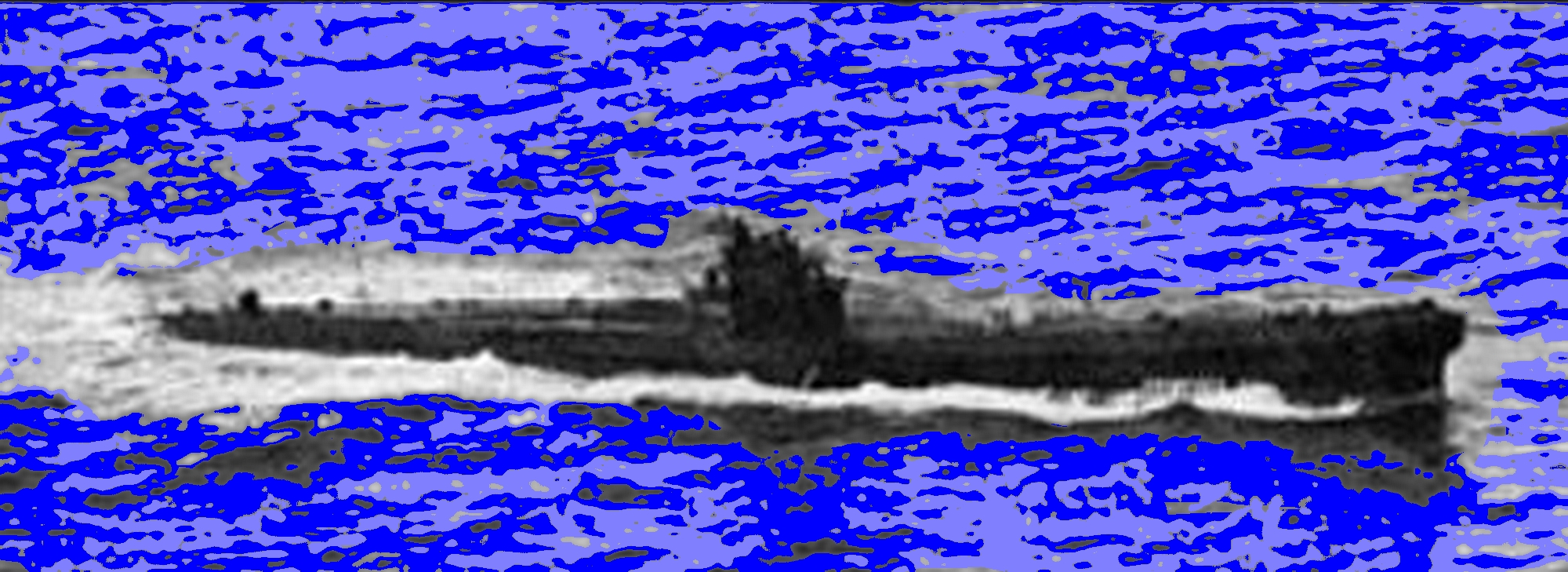
USS Barracuda, plying the Devil's kitchen.

USS Barracuda, plying the Devil’s kitchen in 1936.

Maurice Ewing was a Texas-panhandle farm boy,  became a geophysicist, and then and oceanographer. He conducted the first marine seismic acquisition, inventing the equipment he needed as he sailed the oceans. I find it odd that a lad from the grasslands spent years at sea, but apparently Ewing himself never found it strange. Early in his career, in 1936, he found himself aboard the Barracuda, an oceanography research submarine plying the Caribbean. Also aboard were two other phenomenal young geophysicists, men who would revolutionize the way we understand the planet. These were Edward Bullard, of Cambridge, and Harry Hess, from Princeton. Had the Barracuda floundered, Continue reading

Posted in Exploration, History, Oceans | Tagged , , , , , , | Leave a comment

Zero Degrees of Kelvin

My book, The Mountain Mystery, is not kind to the great physicist Lord Kelvin. I feel a bit uneasy admitting that in my research on the brilliant fellow, I just could not get comfortable. I wouldn’t have been his friend. And I am quite certain Lord Kelvin would have had no spare change for me, either. I picture him doing his civic duty as an old man, addressing the unwashed masses at one of his Christian Evidence Society rallies, a group that directed its activities towards the “lower grades of society, to save them from infidelity.” At one such meeting, he educated the public on the age of our planet. “Not older than twenty million years,” he told his audience in 1900. By then geologists were daring to disagree.

Lord Kelvin, born William Thomson (1824-1907), would have been rightly heralded as the greatest physicist of his time, perhaps all time, if his time had ended before he turned 50. Some have said that during the first half of his adult life, he could get nothing wrong. Every notion emitted from under his tall black hat carried a deserved air of cleverness. Some go on to say that during the second half of Lord Kelvin’s life, he could get nothing right.

First the shining star. William Thomson (his name while he was still clever) figured out thermodynamics. He understood heat transfer and invented the maths and formulae needed to explain it to others. That second law of thermodynamics – the one that says the universe is winding down and will expire in stark cold entropy? Thank Thomson for that. He worked on electrical signal transmission, helping make long-distant telegraphy possible. He was an engineer and a director of the first trans-Atlantic telegraph cable. Thomson made sense of heat, convection, and conduction. At age 24, he calculated the coldest possible temperature, the state where molecular motion stops and physics becomes bizarre. Other scientists named a new temperature scale for him, the Kelvin scale, with Kelvin’s coldest cold (“absolute zero”) as the base for that particular thermometer. Rather than calling that frozen place minus 273.15 Celsius, it is defined as Zero Degrees Kelvin.

One wishes William Thompson had retired early. Queen Victoria peered him for his loyal opposition to Irish rights and Home Rule, and for his political conservatism. As Lord Kelvin, he droned on and on about things he clearly had not thought much about. By his mid- and later years, he was dismissing X-rays as a hoax and shortly before the Wright brothers great experiment, he was telling the newspapers that flight would never be possible. (“No balloon and no aeroplane will ever be practically successful,” he told Garrett Serviss of the New York Journal in 1902.)  On the eve of the great physics revolution kicked off by Einstein, Thomson is claimed to have said, “There is nothing new to be discovered in physics. All that remains is more and more precise measurement.” Physics, thought Kelvin would become a dead science, a place where engineers tinkered with equipment and added a decimal point a decade to already known constants.

In regards to earth science, Lord Kelvin was an unfortunate thorn. He believed the Earth is cooling from an original hot sphere. From his heat conduction calculations, he figured Earth could not be more than perhaps 20 million years old. Likewise the sun. With no knowledge of radiation, fission, or fusion, Kelvin guessed the sun was powered by gravitational collapse. It could not maintain its heat for more than a few million years and must be nearing the end of its reign.  But geologists and evolutionary biologists needed a much older planet to explain the slow gradual processes they observed. Hundreds of millions, perhaps billions of years, were required. Kelvin was adamant. Unyielding in his wrongness.

A brave assistant, John Perry, tried to convince Kelvin that mantle convection (a new idea) may be involved in the Earth’s heat distribution. If it was, it could mean the planet was over a billion years old. But Kelvin insisted the globe is a solid homogenous ball of conducting heat, not differentiated into layers and certainly not convecting heat to the surface. Kelvin probably ruined his insubordinate’s career after Perry dared publish the idea in Nature. Had Kelvin given the idea some real thought, he would have hastened the acceptance of plate tectonics and he would have made a final grand contribution to science. Alas, he was by then an old Lord with no new tricks.
Posted in Biography, History, How Geophysics Works | Tagged , , , , | Leave a comment

Seismic Saves the World

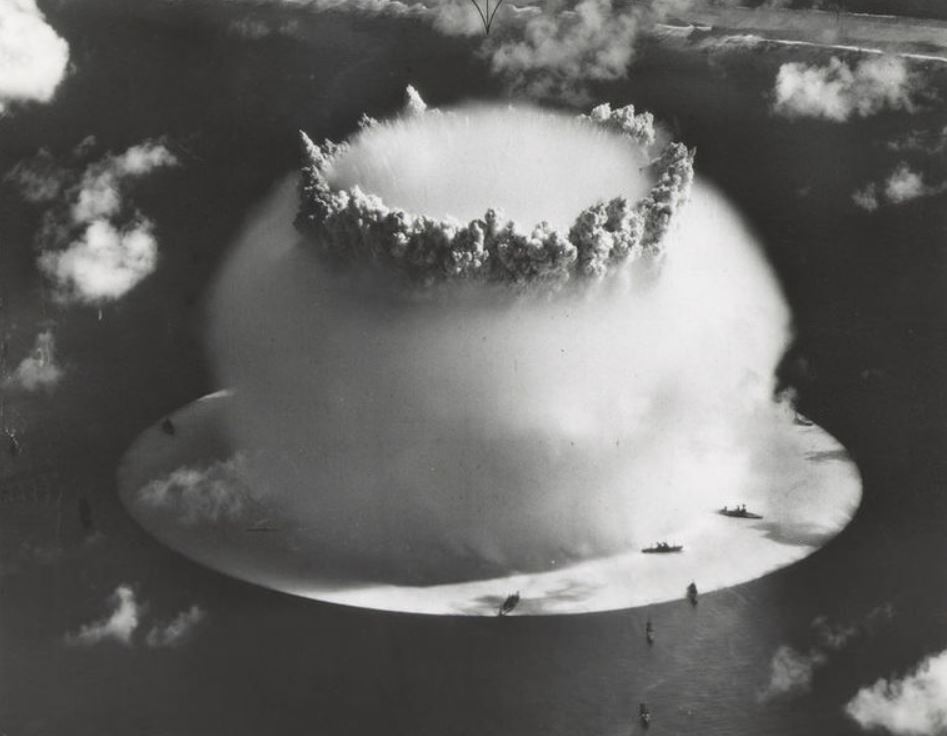
The Pacific Ocean, before the 1963 Test Ban Treaty

The Pacific Ocean, before the 1963 Test Ban Treaty

Remarkable that we haven’t blown the planet to bits with an atomic bomb.  Not yet, anyway. An atmospheric nuclear test ban went in effect August 5, 1963. Exactly 51 years ago today. And almost 20 years after Hiroshima and Nagasaki were obliterated. The 1963 Limited Nuclear Test Ban Treaty – signed by America, Britain, and Russia – limited nuclear testing to underground blasts. Atmospheric, outer space, and underwater tests were prohibited to put “an end to the contamination of man’s environment by radioactive substances.” Good idea. But further nuclear bomb treaties were made possible because of an unlikely discovery made by a geophysics grad student.

A seismic shift towards world peace began when seismologist Jack Oliver, working at the Lamont Earth Observatory just outside New York City noticed some peculiar wiggles showing up on his seismometer. Several things seemed immediately odd about the wiggly shapes on his strips of paper.

The seismic activity arriving in New York appeared to be coming from the deserts of Nevada, a place where strong earthquakes are rare. The second peculiarity was that the seismic wave form, the wiggle’s shape, was quite different from recordings of normal earthquakes. A seismogram from an earthquake starts with strong sideways shear waves, accompanied by weaker pressure waves. Pressure waves are as you might expect – forward pressure along the ground, while shear waves result from side-to-side shaking. During an earthquake, rocks break along a fracture zone, shearing raggedly. That’s why the arriving shear wave is strong and shows side-to-side motion. But Oliver’s records began with a sudden sharp forward-moving pressure wave instead.  The third strange thing about the seismic record was that the signal seemed to radiate from a single point, not a fault zone. Jack Oliver deduced that the single-point was a nuclear explosion in the Nevada desert. Oliver was inadvertently spying on a top-secret test of American atomic weaponry, 4,000 kilometres away.

Jack Oliver admitted he was a bit nervous when he realized what he had discovered. He had the practical common sense of a midwesterner and suspected the army might not be pleased when they learned that a civilian was looking over its shoulder. Oliver was born into a small heartland community, Massillon, Ohio, a steel town just west of the tire factories of Canton. He had been a talented football player, a member of a high school team coached by Paul Brown, later the first coach with a professional football team named after him – the Cleveland Browns. Paul Brown’s help and Jack Oliver’s talent earned him a sports scholarship. But university was interrupted in his second year by World War Two, which put Oliver in the South Pacific. He was thirty years old when he finally finished his geophysics doctorate at Columbia, and accidentally uncovered a way to monitor secret atomic weapons tests.

Rather than being arrested for eavesdropping on the military,  Jack Oliver was soon fêted as a celebrity scientist – the world’s expert on detecting nuclear explosions. He showed that seismic waves from an atomic bomb could be recorded by any backyard tinkerer, anywhere on the planet. Secretive nuclear tests could no longer be hidden from scrutiny. Oliver was invited to the White House. Eisenhower asked him to advise on the first draft of the Nuclear Test Ban Treaty. In the late 1950s, Jack Oliver was a delegate to negotiations in Geneva. With his discovery, American scientists could monitor Russian activities (and, of course, vice-versa) making nuclear tests verifiable and a non-proliferation treaty possible. Geophysicists triangulated blast locations and estimated weaponry power.

There’s more to the story – the American government asked scientists to install monitors all over the world. Their new data proved Tuzo Wilson’s theory of transform faults and gave Jack Oliver and his team proof that subduction plates disappear into the Earth’s crust. . .  This tale continues in the book, The Mountain Mystery.

Posted in Biography, History, How Geophysics Works | Tagged , , , , | Leave a comment

Oblated Spheroids, anyone?

Who cares if the world is not a perfect ball?  You should, for one. Knowing the exact shape of the Earth keeps satellites in place, keeps your GPS navigator working, and keeps you from the dehumanizing torture of asking someone for directions. And the knowledge that the planet lacks a perfect shape… well, maybe that excuses a person’s own lack of physical perfection. But that metaphysical implication was much more serious centuries ago. The lack of perfection in the shape of our planet became an item of debate when Sir Isaac thrust a needle into our ancestors’ collective ego balloon. Society was no longer free to imagine the world as a blob of perfection.

Newton offered mathematical proof (in Principia, 1687) that a spinning ball can oblate. Especially if it has some squishy fluid parts inside. Sir Isaac calculated that the Earth’s flattening, due to centrifugal forces, should be 1/230. In other words, the distance pole to pole, he thought, was about half a percent shorter than a diameter drawn through the equator. Newton’s number was almost right. Today, we have data Newton couldn’t dream of possessing. The actual Continue reading

Posted in History | Tagged , | Leave a comment

Earthquake Prophets

South Carolina. Earthquake.  Yes, according to the US Geological Survey, you need to link these two together in your mind. The government has issued a warning to folks in that southeast American state that it’s time to anchor the foundation. Last week, the government geophysicists issued an update (for the first time in 6 years), warning about the shaking bits in America. South Carolina ranked among the top. They, of course, are not offering any time or date or exact location for the impending earthquake. But if there is a devastating Charleston earthquake, it won’t be the first one. Continue reading

Posted in History, Religion | Tagged , , | Leave a comment

Conspiracies are Everywhere

Bison, anticipating a massive volcanic eruption, seen fleeing Yellowstone.

Yellowstone National Park sits atop the world’s largest supervolcano.  The accompanying caldera will one day tip its hat and obliterate half of the American states. Or maybe not. This blog entry isn’t going to address the date of the park’s extinction (October 22, 2014, around 6 pm, is as good a guess as any), but instead I will write a bit about the human condition. The tendency to assume some group somewhere has secret information  – in other words, conspiratorial thinking – is rife among people who don’t have the energy or desire to engage in a little critical thinking. Among other stories lately surfacing about Yellowstone, there is this news item: Continue reading

Posted in Science Education | Tagged , | Leave a comment

Alaska knows something


4th Avenue, Anchorage

4th Avenue, Anchorage

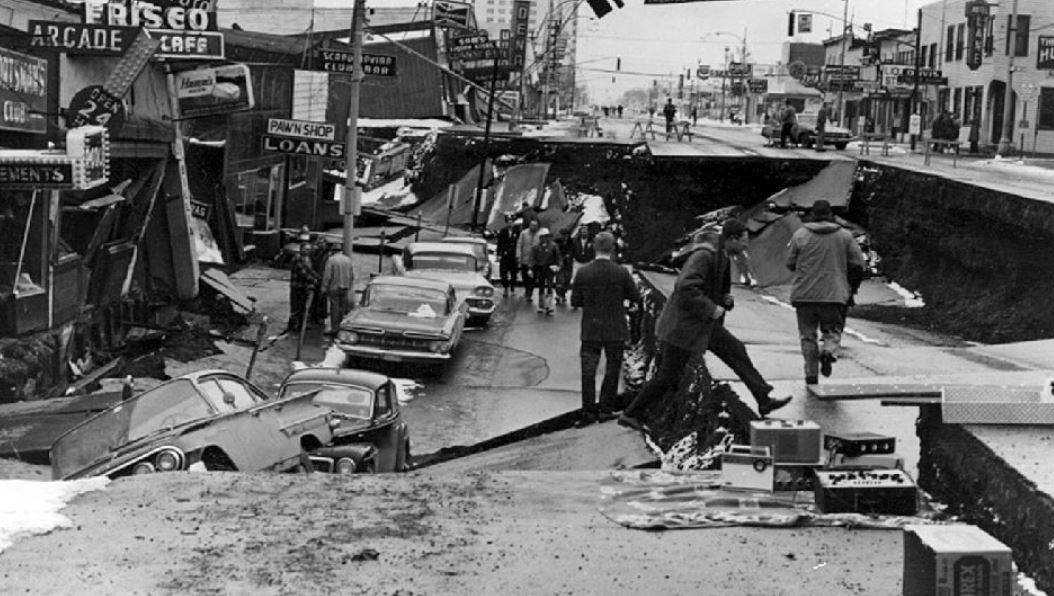
Alaska is taking credit for proving plate tectonics.  OK, that’s an exaggeration. 50 years ago, in March 1964, an incredibly powerful 9.2 Magnitude earthquake shook Alaska.  We are being told that “the quake proved a theory that was just then surfacing in seismology Continue reading

Posted in Engineering, History | Tagged , , | Leave a comment

SWARM of Magnetism

Earth's Magnetic Field (ESA/ATG Medialab image)

Earth’s Magnetic Field
(ESA/ATG Medialab image)

The popular press has been fretting about the impending demise of our protective magnetic field.  Rightly so. We can expect all sorts of nasties when the field fails.

The European Space Agency recently placed a “swarm” of magnetism-sensing satellites in orbit. Well, three in-tandem satellites is hardly a swarm, but the project is called SWARM and its mission is lofty. Since November 2013, this new enterprise has been measuring Continue reading

Posted in History, Space, The Book | Tagged , , | Leave a comment

Boring Mountains

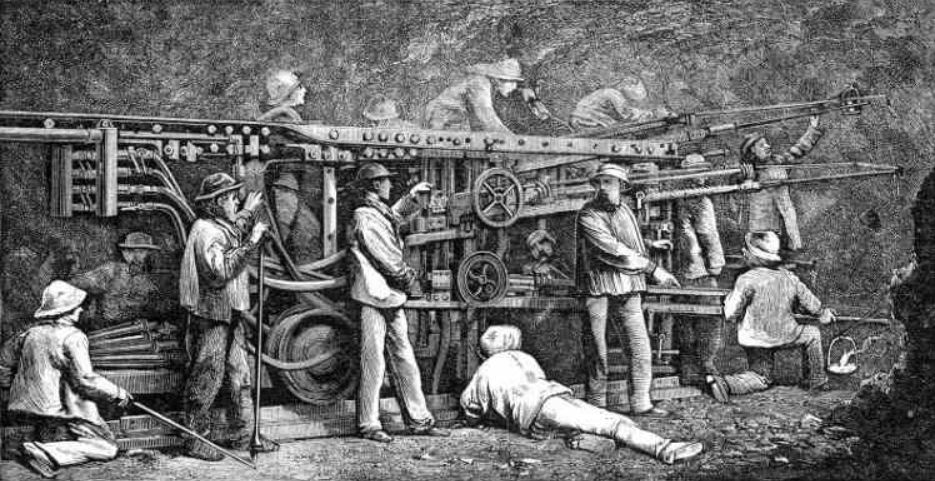
The Sommeiller Mountain-Boring Machine

The Sommeiller Mountain-Boring Machine

You might think that “boring mountains” is an odd title for a blog that promotes the study of mountains.  But today marks the anniversary of the death of an engineer who supervised the first major boring of a mountain anywhere on Earth when he drilled an 8-mile-long (13-km) 2-track railway tunnel through the Alps. In 1871, the tunnel that Gemain Sommeiller created was completed – after 13 years of digging.

When the tunnel linking Italy and France was started, only 8 inches (20 cm) of mountain was gnawed away each day. But Sommeiller soon replaced the men with picks with the tunnel-making machine you see in the photo above. (Even in 1871 some sort of hard hat was part of adigger’s attire.) Sommeiller built a water reservoir high in the mountains to generate the pressure needed to charge a pneumatic system he designed. Boring was suddenly 20 times faster. During the decade of machine-drilling, dynamite had been invented and the project put the stuff to good use, even using some of the first electic charging to ignite the sticks.

The Mount Cenus Fréjus Rail Tunnel  was an engineering marvel when it opened in the fall of 1871. (I guess it still is, actually.) It was twice the length of any previous tunnel. When diggers met (the Italian team punctured a hole through to the French side in December, 1870), their floor was just 2 feet higher than the other side – but horizontally, it was a perfect match. Quite brilliant surveying.

There was likely a ribbon-cutting ceremony when the first train used the tunnel.  Unfortunately, Germain Sommellier was not the one with the scissors. He died July 11, 1871, aged 56. He lived long enough to see the tunnel completed, but the last rail spike wasn’t driven until a couple of months after his death.

Read the book, The Mountain Mystery.

Posted in Biography, Engineering, History | Tagged | Leave a comment

Goddess Pele is stirring

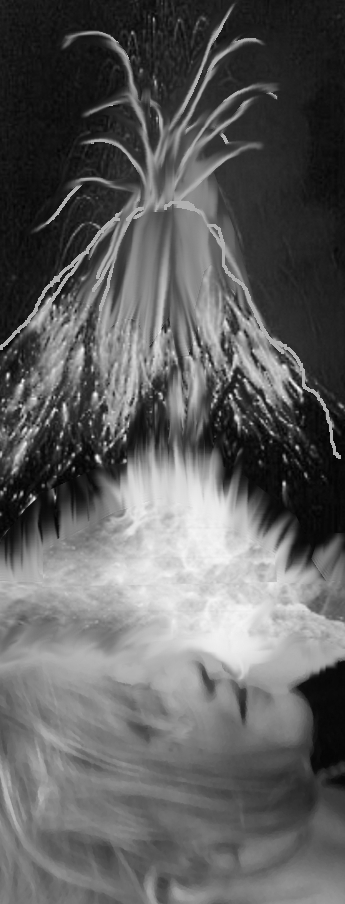
Godess making mountains.

Godess making mountains.

The goddess Pele may be restless again.  It seems that the legendary fire-woman, believed by early Hawaiian islanders to live under the sea and breathe lava into the throats of mountains, may be stirring. According to the ancient legends, the chain of Hawaiian islands grew from the northwest to the southeast as Pele episodically pushed through the seas, causing the series of volcanic islands to erupt. Like many myths, this one has some bits of fact – the oldest, extinct, and most eroded volcanoes are in the northwest, right where the legend says Pele began her work. Today, they say, she is busy under the world’s largest mountain, Mauna Loa, on the big island, which is also the world’s most active volcano.

Canadian geophysicist Tuzo Wilson saw things in a similar way. Back in the mid-1960s, when plate tectonics was finally taken seriously, it was apparent that volcanoes could occur at plate boundaries – the crust was fragmented and friction from the rubbing plates was heating things up, said advocates of the nascent theory. But there were too many examples of volcanic activity far from plate edges. This cast some doubt on plate tectonics, as opponents to drift quickly pointed out. Tuzo Wilson then revealed his dream (I would call it a nightmare.) of the goddess Pele on the bottom of a river, staring up, blowing bubbles from her mouth. The bubbles rose to the surface and, according to Tuzo’s vision, left a trail on the water’s surface. Professor Wilson said this image made him think of a mechanism for volcanoes that occur far from tectonic plate edges. The river is the ocean’s moving crust, Pele is a hot spot, and her exhaust is a mantle plume. Thus plume theory, an auxiliary to plate tectonics was born.

Tuzo Wilson tried, unsuccessfully, to publish his idea in “the leading American geophysics journal.” His revolutionary idea was rejected by the reviewers. Silly and daffy, they must have thought. Wilson quickly submitted his paper to a Canadian physics magazine. The Canadian Journal of Physics published “A Possible Origin of the the Hawaiian Islands” in March 1963. The paper’s editors accepted it because “they didn’t realize it was controversial” said Wilson. Perhaps. But they likely published Wilson’s work because the 55-year-old scientist (known to his friends as the cyclone) had a formidable reputation for clever insights in geology. He was a mountain climber, a travel writer, and one of the first to pilot an aircraft over the north pole. He pretty much invented aerial geology and was well-known as man who seldom got things wrong. He was not the first to support plate tectonics, but he was an early and fervent proponent – once he recognized the bulk of evidence sided with the theory. He was in his mid-50s when he abandoned stationary continents in favour of mobile ones. Very few scientists can make such a leap in ideology and embrace a new theory – and then make major contributions to the hypothesis. (In another posting, I’ll come back to Tuzo Wilson and describe his invention of transform faults and his creation of the idea of a repeatedly opening and closing Atlantic Ocean, now called Wilson Cycles. Plumes, Transform Faults, and Wilson Cycles are integral to plate tectonics.)

Mauna Loa is quite a structure. Pele has constructed a mountain that rises almost 4200 metres above the sea. From the Pacific seafloor to its snowy peak, the mammoth mountain is actually over 9200 metres – making it somewhat taller than Everest. A broad shield volcano, the mountain is 60 miles long and 30 miles wide. It is huge. And formerly, quite active – spewing lava every few years for thousands of years. However, the volcano has been quiet for the last 30 years. Until this spring. Earthquakes are waking cobwebbed seismometers, foretelling the next blast. Volcanologists believe it may be imminent.

Read the book, The Mountain Mystery.

Posted in History, How Geophysics Works | Tagged , , , , , | Leave a comment